
Uncategorized

Uncategorized

Driving Business Growth Through Financial Excellence – Insights from D G Thakrar and Associates

Driving Business Growth Through Financial Excellence – Insights from D G Thakrar and Associates D G Thakrar and Associates A Complete Guide to Financial Compliance, Business Growth, Tax Planning, and Strategic Advisory Services in IndiaIntroductionIn today’s rapidly evolving business environment, financial compliance, taxation, regulatory requirements, and strategic financial management have become more complex than ever. Whether you are a startup founder, MSME owner, corporate executive, investor, or entrepreneur, maintaining financial discipline and ensuring regulatory compliance are essential for sustainable growth. Businesses that fail to manage taxation, accounting, audits, and regulatory obligations effectively often face penalties, cash flow challenges, legal complications, and missed growth opportunities. On the other hand, organizations that adopt a proactive approach to financial management gain a significant competitive advantage. At D G Thakrar and Associates, we believe that Chartered Accountants are not merely compliance professionals—they are strategic partners in business success. Our objective is to help businesses navigate complex financial regulations while creating a strong foundation for long-term growth and profitability. This comprehensive guide explores the importance of professional financial management, taxation strategies, audit services, business advisory solutions, and how expert guidance can help businesses achieve financial excellence. The Evolving Role of Chartered Accountants in Modern Business Traditionally, Chartered Accountants were associated primarily with bookkeeping, auditing, and tax filing. However, the modern business landscape demands far more. Today, Chartered Accountants serve as: Financial strategists Business advisors Compliance specialists Risk management consultants Tax planning experts Investment advisors Corporate restructuring professionals Growth partners As regulatory frameworks become increasingly sophisticated, businesses require expert guidance to remain compliant while maximizing operational efficiency. A professional CA firm plays a crucial role in helping organizations Maintain accurate financial records Ensure statutory compliance Optimize tax liabilities Improve profitability Secure financing Attract investors Manage financial risks Develop growth strategies The value of professional financial advisory extends far beyond compliance. It directly impacts decision-making, business sustainability, and wealth creation. Importance of Financial Compliance for Businesses Businesses and individuals must accurately report income and file returns within prescribed deadlines. Proper tax compliance helps: Avoid penalties Maintain credibility Facilitate loan approvals Support investor confidence GST Compliance The Goods and Services Tax has transformed indirect taxation in India. Businesses must ensure: Accurate GST registration Timely return filing Proper input tax credit management Correct invoicing practices Non-compliance can result in substantial financial consequences. Companies Act ComplianceCompanies are required to comply with various provisions under corporate law, including: Annual filings Board meeting requirements Maintenance of statutory records Financial disclosures Labour Law ComplianceEmployers must comply with regulations relating to: Provident Fund Employee State Insurance Professional Tax Labour welfare provisions Effective compliance management protects businesses from regulatory risks and operational disruptions. Tax Planning: A Strategic Tool for Wealth Creation Many businesses mistakenly view taxation only as a mandatory obligation. In reality, tax planning is one of the most powerful tools for financial optimization. Effective tax planning involves: Understanding applicable laws Utilizing available deductions Structuring transactions efficiently Managing tax liabilities legally Benefits of Tax Planning Improved Cash Flow:– Reduced tax outflows leave more capital available for operations and expansion. Enhanced Profitability:- Tax-efficient structures increase net earnings. Better Investment Decisions:-Strategic tax planning helps businesses and individuals choose optimal investment vehicles. Reduced Litigation Risk:- Proper compliance minimizes disputes with tax authorities. Tax Planning for Individuals:- Professional tax advisory can help individuals optimize: Salary structuring Capital gains management Property transactions Investment planning Retirement planning Tax Planning for Businesses Businesses benefit from: Entity structure optimization Deduction planning GST optimization Transfer pricing compliance International taxation strategies Tax planning is not about tax avoidance; it is about making informed decisions within the legal framework. The Critical Role of Audits An audit is far more than a regulatory requirement. It serves as an independent assessment of a company’s financial position and reporting practices. Objectives of Audits Verify financial accuracy Enhance transparency Detect fraud risks Strengthen internal controls Improve stakeholder confidence Types of Audits Statutory Audit:- Required under applicable laws for eligible entities. Tax Audit:- Conducted to ensure compliance with tax provisions. Internal Audit:- Focuses on operational efficiency and risk management. GST Audit and Review:- Assesses indirect tax compliance and reporting. Management Audit:- Evaluates organizational effectiveness and performance. Benefits of Audits Audits help organizations: Identify weaknesses Improve processes Strengthen governance Increase investor confidence Enhance operational efficiency A properly conducted audit can uncover opportunities for improvement that significantly impact profitability and growth. Accounting and Bookkeeping: The Foundation of Financial Success Accurate accounting is essential for informed decision-making. Without reliable financial records, businesses cannot: Measure performance Control costs Plan growth Secure financing Comply with regulations Importance of Professional Accounting Professional accounting enables businesses to: Track income and expenses Monitor profitability Manage cash flow Prepare financial statements Support strategic planning Common Accounting ChallengesMany businesses face issues such as: Incomplete records Incorrect classifications Delayed reporting Reconciliation errors These issues can lead to compliance risks and poor decision-making. Benefits of Outsourced AccountingOutsourcing accounting functions offers: Cost efficiency Access to expertise Improved accuracy Timely reporting Enhanced compliance A strong accounting system provides management with the information necessary to drive business success. Business Advisory Services: Beyond Traditional Accounting The modern business environment requires strategic guidance. Business advisory services help organizations address challenges and capitalize on opportunities. Key Advisory Areas Financial Planning:- Developing sustainable financial strategies. Budgeting and Forecasting:- Creating realistic plans for growth. Cash Flow Management:- Ensuring adequate liquidity. Cost Optimization:- Identifying areas for improved efficiency. Risk Assessment:- Mitigating financial and operational risks. Benefits of Business Advisory Businesses receive: Better strategic insights Improved decision-making Enhanced profitability Stronger financial controls Sustainable growth plans Professional advisors bring an external perspective that often reveals opportunities overlooked internally. Startup Advisory ServicesIndia has emerged as one of the world’s leading startup ecosystems. However, many startups fail because of inadequate financial planning and compliance management. Challenges Faced by Startups Limited capital Regulatory complexity Cash flow constraints Fundraising difficulties Tax compliance requirements Importance of Professional GuidanceStartup advisory services help founders: Select appropriate business structures Maintain compliance Prepare financial projections Secure investor confidence Optimize tax strategies Areas of Support Company incorporation Startup registration GST registration Financial

Uncategorized

Documents Required for Filing Income Tax Returns in India: A Complete Guide

Documents Required for Filing Income Tax Returns in India: A Complete Guide Introduction Filing an Income Tax Return (ITR) is one of the most important financial responsibilities for taxpayers in India. Whether you are a salaried employee, freelancer, business owner, professional, investor, or retiree, proper documentation is essential for accurate tax filing and compliance with the Income Tax Act. Many taxpayers believe that filing an ITR simply requires a PAN card and salary details. In reality, the documents required depend upon the nature of income, deductions claimed, investments made, and assets owned during the financial year. Maintaining proper records not only helps in accurate tax filing but also minimizes the risk of notices from the Income Tax Department and facilitates quicker processing of refunds. This guide by D G Thakrar and Associates explains the essential documents required for filing Income Tax Returns in India and how taxpayers can prepare themselves for a smooth filing process. Why Proper Documentation is Important Before understanding the specific documents required, it is important to know why maintaining documentation matters. Proper documentation helps: Accurately calculate taxable income. Claim eligible deductions and exemptions. Avoid errors in tax returns. Respond to Income Tax Department queries. Support tax refund claims. Maintain financial transparency. Prevent penalties and legal complications. The Income Tax Department increasingly relies on digital verification and data matching. Therefore, taxpayers must ensure that all information reported in the return is backed by valid documents. Basic Documents Required for Every Taxpayer 1. Permanent Account Number (PAN) PAN is the most important identification document for income tax purposes. It is mandatory for: Filing Income Tax Returns. Financial transactions. Tax payments. Investment reporting. Taxpayers should ensure that their PAN details are correct and linked with Aadhaar. 2. Aadhaar Card Aadhaar has become an important document for income tax compliance. It is required for: Identity verification. E-verification of returns. PAN-Aadhaar linkage. Any mismatch between Aadhaar and PAN details should be corrected before filing the return. 3. Bank Account Details Taxpayers should keep the following ready: Bank account number. IFSC code. Account type. Bank statements. The Income Tax Department credits refunds directly to the validated bank account mentioned in the return. Documents Required for Salaried Employees 1. Form 16 Form 16 is issued by employers and serves as the primary document for salaried taxpayers. It contains: Salary income details. Tax deducted at source (TDS). Exemptions claimed. Deductions allowed. Taxable income calculation. Form 16 is divided into: Part A:- Contains employer and employee details along with TDS information. Part B:- Contains detailed salary breakup and deduction information. 2. Salary Slips Monthly salary slips help verify: Salary components. Allowances. Deductions. Employer contributions. These are particularly useful if there are discrepancies in Form 16. 3. Form 12BA (If Applicable) This form provides details of: Perquisites. Benefits provided by employers. Taxable allowances. Employees receiving company accommodation, cars, or other benefits should review Form 12BA carefully. Documents for Interest Income Interest income is often overlooked during tax filing. Taxpayers should collect: Bank Interest Certificates These show interest earned from: Savings accounts. Fixed deposits. Recurring deposits. Form 16A Issued by banks and financial institutions where TDS has been deducted on interest income. Passbooks and Bank Statements These help verify total interest credited during the financial year. Documents for Capital Gains Investors earning income from shares, mutual funds, or property sales require additional documentation. For Shares and Mutual Funds Keep: Broker statements. Capital gain statements. Contract notes. Dividend statements. These documents help calculate: Short-term capital gains. Long-term capital gains. Securities transaction tax. For Property Transactions Maintain: Sale deed. Purchase deed. Registration documents. Improvement expense records. Stamp duty receipts. These documents are crucial for computing capital gains accurately. Documents for House Property Income Property owners should keep the following records: Rental Agreements Required for reporting rental income. Municipal Tax Receipts Used for claiming deductions while calculating income from house property. Home Loan Interest Certificate Provided by banks and housing finance companies. It contains: Principal repayment amount.Interest paid during the year. These amounts may qualify for deductions under applicable provisions of the Income Tax Act. Documents for Business Owners and Professionals Businesspersons and professionals need comprehensive financial records. Profit and Loss Account Shows: Revenue earned. Expenses incurred. Net profit. Balance Sheet Provides information regarding: Assets. Liabilities. Capital. Books of Accounts Such as: Cash book. Ledger. Purchase register. Sales register. GST Returns Important for reconciling turnover and tax liabilities. Documents include: GSTR-1. GSTR-3B. Annual GST returns. Audit Reports Where applicable, taxpayers should maintain: Tax audit reports. Statutory audit reports. Documents for Claiming Tax Deductions Taxpayers seeking deductions should maintain supporting documents. Section 80C Investments Documents may include: Life insurance premium receipts. ELSS investment statements. Public Provident Fund records. National Savings Certificate receipts. Tuition fee receipts. Tax-saving fixed deposit certificates. Health Insurance Premium (Section 80D) Maintain: Insurance premium receipts. Policy documents. Education Loan Interest Keep: Interest certificates issued by lenders. Donations Maintain: Donation receipts. Trust registration details where applicable. National Pension System (NPS) Keep: Contribution statements. Account transaction records. Form 26AS Form 26AS is one of the most important tax documents. It contains: TDS details. TCS details. Advance tax payments. Refund information. High-value financial transactions. Taxpayers should reconcile their return with Form 26AS before submission. Annual Information Statement (AIS) The Annual Information Statement provides a comprehensive view of financial transactions reported to the Income Tax Department. It includes:   Interest income. Dividend income. Securities transactions. Property transactions. Foreign remittances. Tax payments. AIS helps taxpayers identify income sources that may otherwise be missed. Tax Information Summary (TIS) TIS provides summarized information derived from AIS. It helps taxpayers:   Verify income records. Cross-check tax computations. Reduce reporting errors. Documents for Foreign Income and Assets Residents with foreign income or assets must maintain: Foreign bank account statements. Overseas investment records. Foreign salary certificates. Tax payment records in foreign countries. Proper disclosure is essential to comply with Indian tax regulations. Documents for Freelancers and Consultants Freelancers should maintain:   Invoices raised. Client contracts. Payment receipts. Bank statements. Expense records. Common deductible expenses may include: Office

Uncategorized

Digital Forensics: How AI Models Track Financial Patterns in the Modern Economy

Digital Forensics: How AI Models Track Financial Patterns in the Modern Economy Is Your Digital Footprint Becoming a Financial Fingerprint? A decade ago, tax investigations largely depended on manual scrutiny, whistleblower tips, and selective audits. Today, governments, financial institutions, and regulatory agencies across the world are increasingly deploying artificial intelligence, data analytics, and digital forensics tools to identify suspicious financial activity at a scale that was previously impossible. The result is a profound shift: financial transparency is no longer driven solely by paperwork. It is increasingly driven by data. However, contrary to popular internet narratives, there is no publicly known system that literally tracks “every rupee you spend” through social media photos alone. What is true is that modern digital forensics can combine multiple data sources to identify patterns, inconsistencies, and potential risks far more efficiently than human investigators ever could. The Rise of AI-Powered Financial Surveillance Financial crime investigators now operate in a world flooded with digital information. Every day, billions of data points are generated through: Banking transactions Credit and debit card usage UPI payments E-commerce purchases Property registrations Securities transactions GST filings Corporate records Publicly available online information AI systems can analyze these datasets in seconds, searching for patterns that would take human auditors months or years to discover. The objective is not necessarily to monitor individual citizens continuously. Instead, the technology is designed to identify anomalies—activities that statistically appear inconsistent with reported financial behavior. How Digital Forensics Actually Works Digital forensics involves collecting, preserving, analyzing, and interpreting digital evidence. Modern AI-enhanced forensic systems may evaluate: 1.Transaction Networks Rather than looking at a single payment, algorithms analyze relationships between accounts, businesses, vendors, and counterparties. This helps investigators identify: Circular transactions Shell companies Money laundering structures Undisclosed business income Suspicious fund transfers 2. Lifestyle-Income Analysis One of the most discussed applications is lifestyle discrepancy detection. For example: Luxury vehicle purchases High-value real estate acquisitions Frequent international travel Premium club memberships These activities may be compared against officially reported income sources. A significant mismatch can trigger additional scrutiny. 3. Pattern Recognition AI models excel at identifying behavioral patterns. Instead of asking: “Did this person evade taxes?” The system may ask: “Does this behavior statistically resemble previously identified tax evasion cases?” That subtle difference dramatically improves detection capabilities. The Social Media Factor The internet is full of claims that a vacation photo automatically triggers a tax investigation. Reality is more nuanced. Publicly available information can sometimes support investigations, especially when it appears inconsistent with declared financial activity. Examples might include: Publicly advertised luxury assets Business activities promoted online Undisclosed commercial operations High-value lifestyle displays However, social media alone is generally insufficient evidence. Instead, it may serve as one data point among many within a broader analytical framework. The Power of Machine Learning Traditional auditing relied heavily on random selection. Modern machine learning systems prioritize cases based on probability scores. These models can analyze: Historical fraud cases Industry benchmarks Spending patterns Filing behavior Network relationships The result is a risk-ranking system that directs investigators toward the most suspicious cases. This increases efficiency while reducing the need for purely random audits. Why Tax Authorities Are Investing in AI Governments worldwide face several challenges: Growing Transaction Volumes Digital payments have exploded. Manual review is increasingly impossible. Sophisticated Financial Crimes Modern fraud schemes often involve: Multiple jurisdictions Cryptocurrency transfers Layered transactions Digital identities AI tools provide capabilities necessary to analyze these complex networks. Revenue Protection Tax collection funds public infrastructure, healthcare, education, and governance. Authorities therefore have strong incentives to improve compliance through technology. Is Privacy Disappearing? This is perhaps the most controversial question. Supporters argue that advanced analytics: Reduce corruption Improve tax compliance Detect fraud faster Strengthen financial systems Critics argue that expanding surveillance creates risks Excessive data collection False positives Algorithmic bias Reduced financial privacy The debate is likely to intensify as AI systems become more powerful. The central challenge is balancing enforcement with civil liberties. The Future: Predictive Audits The next frontier is predictive compliance. Instead of investigating violations after they occur, future systems may estimate risk before filings are even submitted. Possible capabilities include: Predicting underreporting risks Identifying suspicious entities early Detecting hidden networks Flagging unusual financial behavior in real time Whether this leads to greater fairness or greater surveillance remains one of the defining questions of the digital age. Final Thoughts The age of manual audits is gradually giving way to data-driven investigations. AI-powered digital forensics can process enormous volumes of information, identify hidden patterns, and help authorities detect financial irregularities more efficiently than ever before. Yet sensational claims that governments can perfectly track every rupee or automatically launch audits based on a single social media post often exaggerate current capabilities. What is undeniable is that the digital economy leaves an expanding trail of data. As artificial intelligence becomes more sophisticated, that trail becomes easier to analyze, connect, and interpret. In the modern financial landscape, transparency is no longer just about what you report—it is increasingly about what your data reveals. Keywords: Digital Forensics, AI Surveillance, Tax Technology, Financial Intelligence, Artificial Intelligence, Compliance Analytics, Tax Audits, Machine Learning, Financial Crime Detection, Data Analytics, Digital Economy, FinTech, AI Governance, Financial Privacy.

Uncategorized

Fractional Ownership: The Wealth Creation Shortcut the Real Estate Industry Didn’t Want You to Notice

Fractional Ownership: The Wealth Creation Shortcut the Real Estate Industry Didn’t Want You to Notice Most Investors Are Playing the Wrong Game For decades, the real estate industry sold the same dream: save for years, take a massive loan, buy a property, and wait patiently for wealth creation. The problem? Grade-A commercial real estate—the office towers occupied by multinational corporations, global banks, and technology giants—was effectively reserved for ultra-high-net-worth individuals and institutional investors. A premium office building worth ₹100 crore wasn’t exactly accessible to the average professional. Until now. A silent revolution has transformed the rules of the game. Fractional ownership platforms have broken down the walls protecting commercial real estate from ordinary investors. Today, investors can own a portion of premium office assets through professionally managed Special Purpose Vehicles (SPVs), often with investments far lower than what would traditionally be required. The old gatekeepers are losing control. And most investors still haven’t realized it. The Secret the Traditional Property Market Doesn’t Advertise Think about how wealthy investors build fortunes. They don’t usually chase random apartments hoping for price appreciation. Instead, they target cash-flow-generating assets. Office buildings. Warehouses. Business parks. Logistics hubs. Why? Because businesses sign long-term leases. When a multinational corporation rents an office, it doesn’t move every year like residential tenants often do. This creates a more predictable rental income stream. Historically, accessing these assets required enormous capital. Fractional ownership changed that equation. Instead of one investor buying the entire property, multiple investors collectively own it through a structured legal framework. The result? Access to institutional-grade assets without institutional-grade wealth. The Provocative Math Most Investors Ignore Let’s examine a simple reality. Many retail investors spend years chasing stock market returns while enduring volatility, corrections, and uncertainty. Meanwhile, commercial real estate investors often focus on two engines of wealth creation: 1. Rental Yield Regular income generated from tenant leases. 2. Capital Appreciation Growth in the asset’s value over time. When both operate simultaneously, the compounding effect becomes powerful. Imagine an investor allocating capital to a premium commercial property occupied by financially strong tenants. Instead of waiting solely for future appreciation, the asset may generate rental income while potentially increasing in value. This creates a dual-return model that many investors overlook. The biggest surprise? You no longer need crores of rupees to participate. Why Traditional Real Estate Experts Are Being Forced to Adapt The conventional property model contains several barriers: Massive down payments High loan obligations Tenant management headaches Legal complications Liquidity concerns Fractional ownership platforms attempt to solve several of these challenges through professional management and structured ownership. This fundamentally challenges an industry norm that existed for generations. For years, investors accepted the belief that premium commercial assets were inaccessible. Now technology, financial innovation, and legal structuring have changed the conversation. The question is no longer whether ordinary investors can access Grade-A commercial real estate. The question is whether they will recognize the opportunity before the market becomes crowded. The Scarcity Factor Nobody Wants to Discuss Not all commercial real estate is equal. Grade-A properties are limited by nature. Prime business districts cannot be endlessly replicated. The best office towers occupy strategic locations with strong infrastructure, connectivity, and tenant demand. As institutional investors continue seeking these assets, competition naturally increases. This creates an interesting dynamic. While thousands of investors focus on residential apartments, a much smaller group is studying income-producing commercial assets. The supply of premium assets remains finite. Demand continues to grow. History suggests that scarcity often creates value. Understanding the SPV Structure One reason fractional ownership gained credibility is the use of Special Purpose Vehicles (SPVs). An SPV is typically a dedicated legal entity created to hold a specific asset. Instead of directly owning a physical slice of a building, investors generally own interests in the entity that owns the asset. Benefits may include: Structured ownership Professional governance Defined investor rights Simplified administration Enhanced transparency This framework has helped institutional-style investing become accessible to a broader audience. However, investors should always carefully review offering documents, legal agreements, fees, and risk disclosures before investing. The Real Wealth Shortcut Isn’t What Most People Think Social media promotes shortcuts every day. Crypto hype. Trading hacks. Get-rich-quick schemes. Most fail the test of sustainability. The truly powerful wealth-building strategies often revolve around ownership of productive assets. Commercial real estate is one such asset class. Fractional ownership doesn’t eliminate risk. No investment can. But it has significantly lowered the entry barrier to a market that was previously dominated by wealthy investors and institutions. That alone represents a major shift in the investment landscape. Why 2026 Could Be a Turning Point Every major wealth trend begins before the majority notices. The internet. Index investing. Cloud computing. Artificial intelligence. Fractional ownership of commercial real estate may follow a similar adoption curve. As awareness grows, more investors are likely to explore alternatives beyond traditional savings accounts, residential property, and volatile market speculation. Those who understand the underlying economics early often gain the advantage. The opportunity isn’t merely about owning real estate. It’s about gaining access to cash-flow-generating assets that were historically unavailable to ordinary investors. The gate has opened. The only question is who walks through it first. Disclaimer This article is for educational purposes only and should not be considered financial, legal, or investment advice. Real estate investments involve risks, including potential loss of capital, illiquidity, vacancy risk, and market fluctuations. Investors should conduct independent due diligence and consult qualified professionals before making investment decisions.

Uncategorized

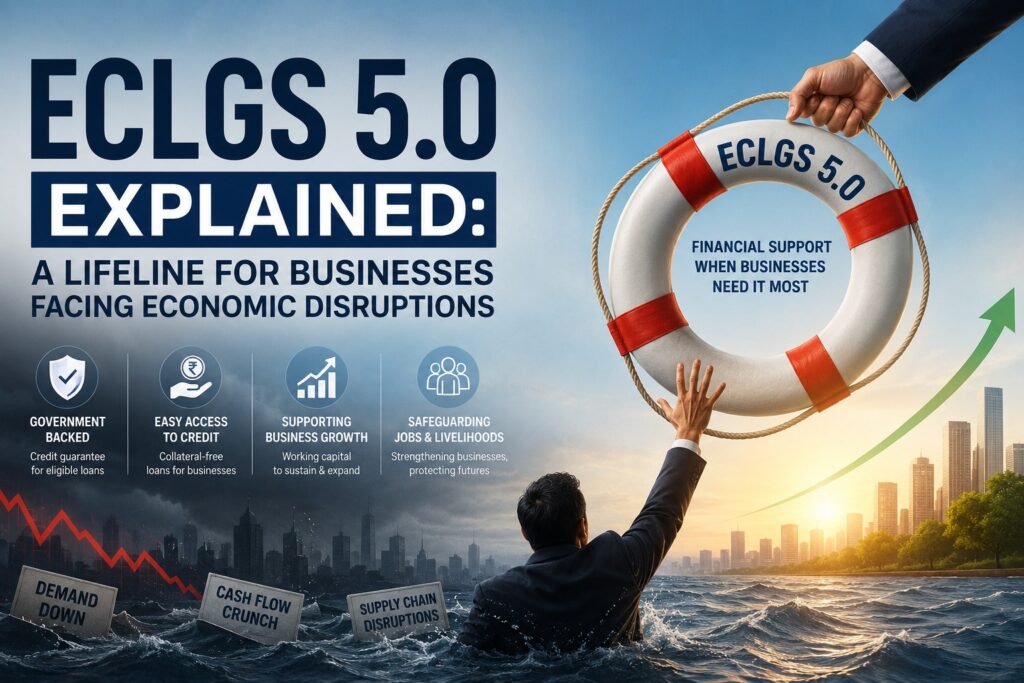
ECLGS 5.0 Explained: A Lifeline for Businesses Facing Economic Disruptions

ECLGS 5.0 Explained: A Lifeline for Businesses Facing Economic Disruptions Introduction Economic uncertainty often creates severe liquidity challenges for businesses. Whether it is a global pandemic, geopolitical tensions, supply chain disruptions, or rising input costs, access to timely credit can determine whether a business survives or struggles. Recognizing these challenges, the Government of India launched the Emergency Credit Line Guarantee Scheme (ECLGS), a collateral-free loan initiative backed by sovereign guarantees. The scheme has evolved through multiple phases, helping millions of businesses maintain operations during periods of economic stress. The latest version, ECLGS 5.0, has been introduced to support businesses impacted by economic disruptions arising from the West Asia conflict and related global uncertainties. The scheme provides guaranteed emergency credit to eligible borrowers without requiring additional collateral, thereby ensuring faster access to funds. This article explains everything businesses need to know about ECLGS 5.0, including eligibility, loan limits, interest rates, repayment terms, and the application process. What is ECLGS 5.0? The Emergency Credit Line Guarantee Scheme (ECLGS) is a government-backed lending program administered through the National Credit Guarantee Trustee Company Limited (NCGTC). Under this scheme, lenders provide additional credit facilities to eligible businesses while the Government provides a guarantee on the sanctioned loan amount. This significantly reduces lending risk and encourages banks and financial institutions to extend support during challenging economic periods. ECLGS 5.0 specifically focuses on addressing liquidity concerns arising from the recent geopolitical and economic disruptions linked to the West Asia conflict. The key objective is simple: Provide immediate working capital support to viable businesses without requiring additional collateral. Why ECLGS 5.0 Matters Many businesses today face challenges such as: Rising commodity prices Supply chain disruptions Increased logistics costs Higher interest burdens Export-import uncertainties Reduced consumer demand in certain sectors For MSMEs and large businesses alike, maintaining adequate working capital becomes critical during such periods. ECLGS 5.0 offers: Faster access to credit Government-backed guarantees Competitive interest rates No additional collateral requirements Long repayment tenures Moratorium on principal repayment These features make it one of the most attractive emergency funding mechanisms available to businesses. Quantum of Financial Assistance Under ECLGS 5.0 For MSMEs and Non-MSMEs Eligible businesses can avail additional credit of up to: 20% of their peak fund-based working capital outstanding during Q4 of FY 2025-26 (January-March 2026). Maximum Loan Limit The total assistance under the scheme is capped at: ₹100 Crore per borrower Example Suppose a manufacturing company had a peak working capital utilization of ₹50 crore during January-March 2026. Eligible ECLGS Loan: 20% × ₹50 crore = ₹10 crore The business can potentially obtain an additional collateral-free emergency credit facility of ₹10 crore. Special Provision for the Aviation Sector The aviation industry continues to face unique financial pressures due to fluctuating fuel prices, international uncertainties, and operational challenges. Recognizing these issues, ECLGS 5.0 provides significantly higher support. Assistance Available Airline companies can avail: Up to 100% of total peak credit outstanding Maximum Limits Base Loan Limit: ₹1,000 crore Additional Limit: ₹500 crore The additional ₹500 crore is available if promoters contribute an equivalent amount of fresh equity. Total Potential Assistance Eligible aviation companies may access financing up to: ₹1,500 crore under specified conditions. Attractive Loan Terms Under ECLGS 5.0 One of the biggest advantages of the scheme is its borrower-friendly structure. Interest Rate Cap For Banks and Financial Institutions Interest rates are capped at: EBLR + 0.75% subject to a maximum of: 9% per annum For NBFCs Maximum permissible interest rate: 13% per annum This cap protects borrowers from excessive borrowing costs during periods of economic stress. Repayment Tenure MSMEs and Non-MSMEs Loan Tenure 5 YearsMoratorium 1-Year Moratorium on Principal Repayment During the moratorium period, borrowers typically pay only interest, allowing them to preserve cash flows. Aviation SectorLoan Tenure 7 Years Moratorium 2-Year Principal Moratorium This longer repayment structure reflects the unique recovery cycle of airline businesses. No Additional Financial Burden Another major benefit of ECLGS 5.0 is the elimination of several charges that businesses normally incur while obtaining loans. Borrowers are not required to pay: Guarantee Fees Processing Fees Pre-payment Charges Foreclosure Charges Penal Prepayment Costs Additionally: No Additional Collateral Required Businesses can obtain the emergency credit facility without pledging extra assets or securities. This feature is particularly valuable for MSMEs that may already have most of their assets encumbered. Eligibility Criteria for ECLGS 5.0 To qualify for assistance under the scheme, businesses must satisfy certain baseline conditions. Existing Working Capital Relationship The borrower must already have: Fund-based working capital limits With a participating Member Lending Institution (MLI) MLIs include banks, financial institutions, and eligible NBFCs participating in the scheme. Standard Asset Classification The borrower’s account must be classified as: Standard Account as on: 31 March 2026 Accounts categorized as: SMA-2Non-Performing Assets (NPAs) are generally not eligible. This condition ensures that support reaches fundamentally viable businesses experiencing temporary liquidity pressures. Who Can Benefit Most from ECLGS 5.0? The scheme is particularly useful for: Manufacturing Businesses Raw material purchases Inventory management Production continuity Exporters Working capital requirements Shipment financing Foreign order fulfillment Service Enterprises Payroll support Operational expenses Business expansion Infrastructure Contractors Project execution funding Equipment maintenance Vendor payments Aviation Companies Fuel expenses Operational costs Fleet maintenance Step-by-Step Application Process The Government has streamlined the application process through a centralized digital platform. Step 1: Visit the Jan Samarth Portal Eligible borrowers must submit applications through the official Jan Samarth Portal. Step 2: Select ECLGS 5.0 Choose the relevant emergency credit scheme category. Step 3: Complete Eligibility Assessment Provide: Business details Existing credit information Financial information Step 4: Upload Required Documents Typical documents may include: PAN GST Registration Financial Statements Existing Loan Details KYC Documents Step 5: Choose Lending Institution Select a participating Member Lending Institution. Step 6: Submit Application The selected lender evaluates the application and processes the sanctioned facility under ECLGS guidelines. Key Benefits at a Glance Feature ECLGS 5.0 Benefit Collateral Requirement Nil Government Guarantee Yes Processing Fee Nil Guarantee Fee Nil Prepayment Charges Nil MSME Loan Tenure 5 Years Aviation Loan Tenure 7

Uncategorized

SEBI के नियम जो तय करते हैं कि Listed Companies कैसे काम करेंगी

SEBI के नियम जो तय करते हैं कि Listed Companies कैसे काम करेंगी अगर आपने कभी शेयर मार्केट में निवेश किया है या किसी कंपनी के quarterly results, board meeting updates या बड़े corporate announcements के बारे में सुना है, तो आपने अप्रत्यक्ष रूप से LODR Regulations का असर जरूर देखा होगा। LODR यानी Listing Obligations and Disclosure Requirements — यह SEBI द्वारा बनाया गया एक महत्वपूर्ण regulatory framework है, जो भारत की listed companies के लिए transparency और accountability सुनिश्चित करता है। 2015 में लागू किए गए ये नियम भारतीय stock market को अधिक भरोसेमंद, पारदर्शी और investor-friendly बनाने के उद्देश्य से बनाए गए थे। LODR का Full Form क्या है? LODR = Listing Obligations and Disclosure Requirements यह regulations का एक comprehensive set है जिसे SEBI (Securities and Exchange Board of India) ने बनाया है। इनका उद्देश्य है कि जो भी कंपनी भारतीय stock exchanges जैसे NSE या BSE पर listed है, वह investors को समय पर और सही जानकारी उपलब्ध कराए। LODR Regulations क्यों जरूरी हैं? Stock market में निवेश का सबसे बड़ा आधार होता है — विश्वास। अगर listed companies महत्वपूर्ण जानकारी छुपाने लगें, financial data समय पर न दें, या shareholders को अंधेरे में रखें, तो पूरा market प्रभावित हो सकता है। इसीलिए LODR regulations सुनिश्चित करते हैं कि: सभी investors को समान जानकारी मिले Market manipulation कम हो Corporate governance मजबूत हो Companies जवाबदेह रहें Public disclosures समय पर हों LODR का Core Purpose LODR regulations listed entities के संचालन और communication को standardize करते हैं। इसका मुख्य उद्देश्य तीन बड़े pillars पर आधारित है: 1. Transparency (पारदर्शिता) कंपनियों को हर महत्वपूर्ण जानकारी public domain में समय पर disclose करनी होती है। जैसे: बड़े acquisitions mergers litigations management changes financial results इससे insider information का misuse कम होता है। 2. Corporate Governance LODR rules कंपनी के board structure को regulate करते हैं। इनमें शामिल हैं: Independent directors की minimum संख्या Audit committee की अनिवार्यता Risk management policies Related party transaction approvals इससे management पर checks and balances बने रहते हैं। 3. Accountability (जवाबदेही) कंपनियों को नियमित reporting करनी होती है ताकि investors कंपनी की performance और compliance status समझ सकें। LODR किन क्षेत्रों को regulate करता है? LODR regulations कई महत्वपूर्ण compliance areas को cover करते हैं। 1. Financial Results Reporting Listed companies को mandatory basis पर financial statements submit करने होते हैं: Quarterly Results Half-Yearly Results Annual Financial Statements इन reports के जरिए investors कंपनी की financial health समझते हैं। 2. Board of Directors Rules SEBI ने board composition के लिए specific norms तय किए हैं: Independent directors की minimum requirement महिला director की अनिवार्यता (certain companies में) Directorship limits इसका उद्देश्य governance standards को मजबूत बनाना है। 3. Material Event Disclosures अगर कंपनी में कोई बड़ा event होता है, तो उसे तुरंत stock exchanges को inform करना होता है। उदाहरण: CEO या MD का resignation Acquisition या merger बड़ी legal disputes Fund raising announcements Credit rating changes कई disclosures के लिए strict timelines भी निर्धारित हैं। 4. Related Party Transactions LODR regulations related-party dealings पर खास ध्यान देते हैं ताकि promoter groups unfair advantage न ले सकें। Companies को: Such transactions disclose करने होते हैं Audit committee approval लेना होता है कई मामलों में shareholder approval भी जरूरी होता है 5. Investor Grievance Reporting Companies को investor complaints का record maintain करना होता है और उनकी resolution status report करनी होती है। यह investor protection का महत्वपूर्ण हिस्सा है। LODR किन कंपनियों पर लागू होता है? LODR regulations उन सभी entities पर लागू होते हैं जिनकी securities भारतीय stock exchanges पर listed हैं। इसमें शामिल हैं: Equity Shares Non-Convertible Debentures (NCDs) Non-Convertible Redeemable Preference Shares (NCRPS) Other listed securities यदि कोई कंपनी NSE या BSE जैसे recognized exchange पर listed है, तो उसे LODR compliance follow करना ही होगा। LODR का Investors पर क्या असर पड़ता है? LODR regulations ने Indian stock market में investor confidence बढ़ाने में बड़ी भूमिका निभाई है। Investors को फायदे: समय पर जानकारी मिलती है Corporate fraud risk कम होता है Better decision-making possible होती है Market transparency बढ़ती है Companies के लिए Challenges हालांकि LODR transparency बढ़ाता है, लेकिन compliance maintain करना आसान नहीं होता। Companies को: Continuous disclosures करने होते हैं Compliance teams maintain करनी पड़ती हैं Timelines का strict पालन करना पड़ता है Regulatory penalties से बचना होता है Non-compliance की स्थिति में SEBI penalties, fines और trading restrictions भी लगा सकता है। Recent Importance of LODR in India पिछले कुछ वर्षों में SEBI ने corporate governance और disclosure standards को और मजबूत किया है। Market capitalization बढ़ने और retail investors की संख्या तेजी से बढ़ने के कारण LODR regulations की relevance पहले से कहीं अधिक बढ़ गई है। आज investors केवल profit नहीं देखते, बल्कि: governance standards disclosure quality management transparency को भी evaluate करते हैं। निष्कर्ष LODR regulations भारतीय capital market की backbone माने जाते हैं। ये केवल compliance rules नहीं हैं, बल्कि listed companies और investors के बीच विश्वास बनाए रखने का एक महत्वपूर्ण माध्यम हैं। अगर आप stock market investor हैं, finance professional हैं, या corporate compliance को समझना चाहते हैं, तो LODR regulations की basic understanding बेहद जरूरी है। SEBI का यह framework Indian markets को अधिक transparent, disciplined और globally competitive बनाने में अहम भूमिका निभा रहा है।  

Uncategorized

क्या Banks और Income Tax Department के बीच Information Sharing पहले से ज्यादा बढ़ चुकी है?

क्या Banks और Income Tax Department के बीच Information Sharing पहले से ज्यादा बढ़ चुकी है? भारत का financial ecosystem पिछले कुछ वर्षों में तेजी से digital और interconnected हुआ है।आज banking system, Income Tax Department, GST network, PAN-Aadhaar linkage और digital payment infrastructure पहले की तुलना में कहीं अधिक integrated तरीके से काम कर रहे हैं। इसी वजह से एक सवाल बहुत तेजी से लोगों के मन में उठ रहा है — क्या अब Banks और Income Tax Department के बीच information sharing पहले से ज्यादा बढ़ चुकी है? इसका सीधा जवाब है — हाँ। लेकिन इसका मतलब क्या है? क्या हर transaction पर निगरानी रखी जा रही है? क्या हर bank account automatically scan होता है? और आखिर किस प्रकार की transactions authorities तक पहुँच सकती हैं? आइए इसे आसान भाषा में समझते हैं। पहले System कैसा था? कुछ वर्षों पहले तक banking और taxation systems largely अलग-अलग तरीके से operate करते थे। Information sharing अक्सर: manual reporting, selective investigations, specific complaints, या suspicious cases तक सीमित रहती थी। यानि हर financial activity centrally visible नहीं होती थी। लेकिन digital transformation के बाद स्थिति तेजी से बदली है। आज कौन-कौन सी Financial Activities Report हो सकती हैं? आज कई high-value transactions automated reporting frameworks के तहत capture किए जा सकते हैं। इनमें शामिल हो सकते हैं: Large cash deposits High-value cash withdrawals Fixed deposits above certain thresholds Heavy credit card spending Property-linked banking transactions Foreign remittances Investment transactions Certain structured cash activities इन transactions का data अलग-अलग regulatory channels के माध्यम से authorities तक पहुँच सकता है। PAN, Aadhaar और AIS ने क्या बदला? आज PAN linkage, Aadhaar integration और AIS (Annual Information Statement) ने financial visibility को काफी बढ़ा दिया है। अब अलग-अलग systems interconnected हो चुके हैं: Banking KYC systems TDS reporting GST data Investment records Digital payment trails Property transaction reporting इस integration का उद्देश्य tax compliance और transparency बढ़ाना है। क्या Income Tax Department हर Bank Account देखता है? यह एक common misconception है। असल में system किसी officer के manually बैठकर हर account देखने जैसा नहीं होता। आज का monitoring framework largely: automated, data-driven, algorithm-based, और risk-analysis oriented हो चुका है। Focus आमतौर पर उन cases पर होता है जहाँ: declared income, spending behaviour, asset profile, और banking activity के बीच बड़ा mismatch दिखाई देता है। Banks की भूमिका क्यों बदल गई है? आज banks केवल customer service institutions नहीं रह गए हैं। उनकी regulatory responsibilities पहले से काफी बढ़ चुकी हैं। Banks को अब कई compliance frameworks follow करने होते हैं: KYC (Know Your Customer) AML (Anti-Money Laundering) Suspicious Transaction Reporting Risk Monitoring Systems Regulatory Audits इसी कारण banking secrecy का traditional concept काफी बदल चुका है। क्या हर Transaction Problem बन सकता है? नहीं। भारत जैसी बड़ी economy में करोड़ों legitimate transactions रोज़ होते हैं। सिर्फ transaction बड़ा होने से कोई व्यक्ति गलत नहीं हो जाता। असल concern तब होता है जब authorities को दिखाई देता है: unexplained fund movement, unusual cash behaviour, structured deposits, inconsistent income profile, या suspicious financial patterns। Future में क्या बदल सकता है? Experts का मानना है कि आने वाले समय में: AI-based analytics, centralized reporting systems, automated risk detection, और inter-agency coordination और मजबूत होंगे। यानि financial transparency लगातार बढ़ती जाएगी। लेकिन इसके साथ privacy protection, data security और fair usage frameworks भी equally important रहेंगे। क्योंकि किसी भी modern economy में monitoring और citizen trust — दोनों के बीच संतुलन बनाए रखना जरूरी है। निष्कर्ष Banks और Income Tax Department के बीच information sharing पहले की तुलना में निश्चित रूप से अधिक advanced, digital और integrated हो चुकी है। लेकिन इसका उद्देश्य हर व्यक्ति को suspect मानना नहीं, बल्कि financial transparency और compliance को बेहतर बनाना है। यदि आपकी financial activities genuine, documented और properly disclosed हैं, तो unnecessary panic की आवश्यकता नहीं है। आज के समय में सबसे महत्वपूर्ण चीज है: proper documentation, clean financial records, transparent transactions, और timely tax compliance इसी से future financial scrutiny के risks काफी हद तक कम किए जा सकते हैं।

Uncategorized

CMEGP Scheme – A Major Funding Opportunity for New Businesses & Entrepreneurs in Maharashtra

CMEGP Scheme – A Major Funding Opportunity for New Businesses & Entrepreneurs in Maharashtra The Chief Minister Employment Generation Programme (CMEGP) is one of the most important subsidy schemes introduced by the Government of Maharashtra to promote self-employment, entrepreneurship, and small business development across the state. The scheme is implemented through the Directorate of Industries, Government of Maharashtra, with the objective of supporting unemployed youth, aspiring entrepreneurs, startups, service businesses, manufacturing units, and rural enterprises by providing financial assistance and capital subsidy for establishing new projects. CMEGP has emerged as a significant opportunity for individuals looking to start their own business in sectors such as manufacturing, hospitality, food processing, tourism, retail trade, agro-based industries, service enterprises, repair centres, workshops, and various small-scale commercial activities. The scheme is especially beneficial for first-generation entrepreneurs who face challenges in arranging project finance and margin money for starting a business. Under the CMEGP scheme, eligible entrepreneurs can obtain bank loans for setting up new business ventures along with government subsidy support. The scheme generally covers both manufacturing and service sector projects, subject to prescribed eligibility criteria and project limits. Depending on the category of applicant and location of the project, subsidy assistance can range substantially, thereby reducing the entrepreneur’s effective project cost and initial financial burden. The scheme gives special encouragement to youth, women entrepreneurs, rural entrepreneurs, SC/ST applicants, minority communities, and economically weaker sections. One of the major advantages of CMEGP is that it supports employment generation at the grassroots level while encouraging local economic development and entrepreneurship within Maharashtra. Projects eligible under CMEGP may include: Small manufacturing units Food processing businesses Hotels and restaurants Tourism and hospitality ventures Agro-processing units Service industries Repair and maintenance workshops Retail businesses Handicraft and village industries Packaging and trading businesses Digital and technology-based service units Rural and micro enterprises The scheme can be particularly useful for entrepreneurs planning small hotels, homestays, agro tourism units, cafés, food outlets, tourism service centres, travel businesses, and hospitality ventures in Maharashtra. In many cases, CMEGP can work as a complementary funding mechanism alongside other tourism and MSME incentives available under various state and central government policies. However, successful approval under the CMEGP scheme requires proper project planning, documentation, financial projections, eligibility compliance, banking coordination, and subsidy claim management. Many applications face delays or rejection due to incomplete documentation, improper project structuring, or lack of financial planning. CA Deepak G. Thakarar & Associates can assist entrepreneurs, startups, MSMEs, and business owners in the complete process of CMEGP project planning and implementation. The firm can provide professional support in preparing detailed project reports (DPRs), CMA data, financial projections, subsidy calculations, loan documentation, banking coordination, registration processes, and overall project structuring required for CMEGP approval. The firm can also assist clients in: Business feasibility studies Project cost estimation Loan proposal preparation Subsidy eligibility assessment MSME registration support GST registration and compliance Accounting and taxation advisory Financial documentation Working capital planning Bank liaison and follow-up Compliance management after loan sanction For entrepreneurs planning tourism, hospitality, manufacturing, or service-based businesses in Maharashtra, professional guidance can significantly improve the chances of successful project approval and timely subsidy disbursement. Proper planning not only helps in obtaining financial assistance but also ensures long-term sustainability and operational efficiency of the business. CMEGP is more than just a subsidy scheme — it is an opportunity for aspiring entrepreneurs to transform business ideas into sustainable enterprises with government support. With increasing focus on entrepreneurship, employment generation, tourism development, and MSME growth, the scheme can play a major role in helping businesses establish and expand successfully in Maharashtra.

Scroll to Top