
Author name: aryan

Uncategorized

Glamping vs. Luxury Apartments: A Comparative ROI, Cash Flow, and Tax Analysis for Modern Investors

Glamping vs. Luxury Apartments: A Comparative ROI, Cash Flow, and Tax Analysis for Modern Investors The New Battle in Real Estate Investing For decades, luxury apartments have been regarded as one of the safest ways to build wealth. Investors purchased premium residential units in prime urban locations, collected rental income, benefited from long-term appreciation, and leveraged financing to grow their portfolios. This strategy has produced substantial wealth across global real estate markets. However, the investment landscape is evolving. In 2026, another asset class—luxury glamping—is attracting attention from developers, hospitality entrepreneurs, family offices, and investors seeking exposure to the expanding experiential travel economy. Luxury glamping is no longer synonymous with basic camping. High-end geodesic domes, designer safari tents, luxury treehouses, glass cabins, and eco-lodges now offer hotel-grade amenities while immersing guests in nature. These properties blend hospitality with real estate, creating income streams that differ significantly from those of traditional residential investments. This raises an important question: Can luxury glamping deliver better returns than luxury apartments? There is no universal answer. The outcome depends on market conditions, management capability, financing, taxation, and local regulations. Nevertheless, comparing the two asset classes provides valuable insight into how modern investors can diversify their portfolios. The Investment Philosophy Behind Each Asset At first glance, both investments involve acquiring land or property and generating income. Beyond that similarity, their economics differ considerably. Luxury Apartments Luxury apartments are primarily passive real estate investments. Income typically comes from long-term leases or, where permitted, short-term rentals. Performance depends on factors such as rental demand, property appreciation, financing costs, and operating expenses. Investors generally evaluate apartments using metrics including: Rental yield Occupancy rate Net operating income (NOI) Capital appreciation Cash-on-cash return Luxury Glamping Luxury glamping combines real estate ownership with hospitality operations. Revenue is generated through guest bookings, premium experiences, food and beverage services, events, wellness programs, and other ancillary offerings. Because it operates as a hospitality business, investors often monitor: Average Daily Rate (ADR) Occupancy Revenue per available unit (RevPAR) Guest acquisition costs Operating margin Return on invested capital (ROIC) The distinction is important: luxury apartments emphasize stable rental income, whereas luxury glamping emphasizes operational performance and guest demand. Capital Expenditure: Permanent Luxury vs. Portable Luxury Luxury apartment developments often require: Urban or premium suburban land Extensive construction Longer approval timelines Significant financing High infrastructure costs Luxury glamping developments typically involve: Land ownership or long-term lease Site preparation Modular accommodation units Utilities and common facilities Landscaping Booking and management systems Depending on location and regulations, modular or semi-permanent structures may reduce construction timelines compared with conventional buildings. However, infrastructure requirements, environmental compliance, and utility connections can still represent significant investments. The lower initial capital requirement of some glamping projects may allow developers to test demand before expanding. Revenue Generation Luxury Apartments Apartment revenue is generally predictable. A tenant signs a lease, pays monthly rent, and occupancy remains relatively stable throughout the lease period. Advantages include: Consistent cash flow Lower marketing costs Simplified operations Stable occupancy Disadvantages include: Limited pricing flexibility Fixed rental agreements Vacancy risk between tenantsLuxury Glamping Luxury glamping properties operate more like boutique resorts. Revenue can include: Accommodation Dining Guided experiences Wellness packages Adventure activities Corporate retreats Weddings Photography sessions Unlike apartment rentals, pricing can change dynamically according to seasonality, holidays, local events, and demand. This flexibility creates opportunities for higher revenue during peak periods but also increases exposure to seasonal fluctuations. Cash Flow Comparison Cash flow is one of the most important measures for any investment. Luxury Apartments Cash flow tends to be relatively stable because rental contracts generate recurring monthly income. Operating expenses typically include: Maintenance Property taxes Insurance Building association fees Repairs Property management Unexpected repairs and prolonged vacancies can reduce returns, but cash flow is generally easier to forecast. Luxury Glamping Cash flow depends on several operational factors: Occupancy Average Daily Rate Guest reviews Marketing effectiveness Seasonal demand Additional guest spending A well-managed property can generate multiple revenue streams, but hospitality operations require active management, staffing, and customer service. As a result, potential returns may be higher, but so is operational complexity. Understanding ROI Return on investment is influenced by much more than purchase price. Luxury apartments often rely on: Long-term appreciation Rental yield Debt financing Urban infrastructure development Luxury glamping may benefit from: Premium pricing Experience-driven demand Diversified revenue Operational improvements Brand development Neither investment guarantees superior returns. Success depends on disciplined financial planning and execution. Occupancy and Pricing Power Luxury apartments generally experience consistent occupancy because tenants require housing regardless of tourism trends. Luxury glamping occupancy is influenced by: Tourism demandWeather Economic conditions Destination popularity Marketing Guest satisfaction During peak travel seasons, hospitality businesses may increase room rates, while residential leases usually remain fixed for the duration of the agreement. This pricing flexibility can enhance revenue, provided occupancy remains strong. Maintenance and Operating Costs Luxury apartments require ongoing maintenance of: Elevators Common areas Plumbing Electrical systems Security Building infrastructure Luxury glamping properties may avoid some high-rise maintenance costs but still require investment in: Landscaping Guest amenities Housekeeping Utilities Outdoor infrastructure Property upgrades The maintenance profile differs rather than disappearing altogether. Tax Considerations Tax treatment varies significantly across jurisdictions and ownership structures. Luxury Apartments Depending on local law, investors may claim deductions for expenses such as: Mortgage interest (where permitted) Repairs Maintenance Insurance Property management Depreciation Luxury Glamping Because luxury glamping generally operates as a business, eligible deductions may include: Operating expenses Employee salaries Marketing Equipment Utilities Furnishings Depreciation on qualifying assets Some jurisdictions also provide tourism incentives or accelerated depreciation for qualifying hospitality investments. However, these benefits differ widely between countries and may depend on project structure and applicable tax legislation. Professional tax advice is essential before relying on any incentive. Risk ProfileLuxury Apartments Common risks include: Rental regulation Interest rate increases Vacancy Market corrections Property taxes Luxury Glamping Hospitality investments face additional risks: Seasonality Weather Tourism cycles Reputation management Online reviews Operational performance Regulatory approvals Investors should evaluate whether they are comfortable managing a hospitality business or prefer a

Uncategorized

Glamping Economics: Break-Even, IRR, and the Future of Modular Luxury Resorts (Part 3)

Glamping Economics: Break-Even, IRR, and the Future of Modular Luxury Resorts (Part 3) Every hospitality investment eventually arrives at a single defining question: When does the project begin creating real wealth? Beautiful architecture, sustainable design, luxury amenities, and premium guest experiences all contribute to market appeal, but investors ultimately measure success through financial performance. Cash flow must exceed operating costs, debt obligations must remain manageable, and the initial capital investment must generate returns that justify the risks undertaken. This is where break-even analysis, payback calculations, Internal Rate of Return (IRR), and long-term asset value become the ultimate tests of any hospitality business model. Prefabricated sustainable luxury tents have attracted considerable attention because they fundamentally alter these financial equations. Lower capital expenditure is only the starting point. The combination of faster construction, earlier revenue generation, lean operating costs, and scalable expansion creates a financial structure that often differs significantly from traditional resort development. Investors are increasingly discovering that the most valuable hospitality assets are not necessarily those built with the highest budgets, but those capable of converting invested capital into recurring profits with maximum efficiency. The first metric examined by lenders and equity investors is the break-even point. In simple terms, break-even represents the level of occupancy at which total revenue equals total operating expenses, financing costs, and fixed obligations. Until this threshold is reached, the business consumes capital rather than generating it. Every additional occupied night beyond break-even contributes directly toward profitability and shareholder returns. The Contrarian Comparison: Challenging Traditional Hospitality Economics Traditional luxury hotels frequently face relatively high break-even occupancy levels because their fixed costs remain substantial regardless of guest volume. Large buildings require continuous maintenance, extensive staffing, climate control systems, elevators, security operations, and common area management whether occupancy stands at thirty percent or ninety percent. High debt resulting from expensive construction further increases monthly financial obligations. Glamping resorts operate with a fundamentally different cost structure. Their lower capital investment generally results in smaller loan amounts and reduced interest payments. Maintenance requirements are distributed across individual modules rather than centralized buildings. Staffing models remain lean, while utilities are optimized through decentralized systems and renewable energy integration. Because recurring expenses remain comparatively lower, many modular hospitality projects can sustain operations at lower occupancy levels than conventional luxury hotels, although actual break-even points depend on the project’s financing structure, pricing, and operating costs. To understand the financial implications, consider a hypothetical luxury glamping development consisting of thirty premium accommodation units located within an emerging eco-tourism destination. If average nightly rates remain strong and operating expenses are effectively controlled, the resort may achieve positive operating cash flow at occupancy levels substantially below those required by an equivalently positioned conventional hotel. This provides operators with greater resilience during seasonal demand fluctuations and economic uncertainty. Occupancy management therefore becomes one of the most powerful financial tools available to resort operators. Rather than pursuing maximum occupancy throughout the year, many successful glamping businesses focus on maximizing revenue per available unit while maintaining exclusivity. Premium pricing often produces stronger profitability than discounted rates intended solely to increase occupancy percentages. Revenue management systems now use artificial intelligence to optimize room pricing based on booking patterns, seasonal demand, weather forecasts, local events, airline capacity, competitor pricing, and historical guest behavior. Instead of relying upon static tariffs, operators dynamically adjust pricing to maximize overall revenue generation. Weekend demand frequently commands premium pricing due to leisure travelers seeking nature escapes. Weekday demand increasingly comes from corporate retreats, wellness programs, educational workshops, destination weddings, photography expeditions, and remote working experiences. Diversifying customer segments reduces dependence upon any single source of revenue while stabilizing annual occupancy. One of the most frequently discussed advantages of modular hospitality involves the payback period. Conventional luxury resorts often require ten to fifteen years before investors fully recover their initial capital investment, particularly when construction delays, financing costs, and market volatility are considered. Large-scale infrastructure projects demand patience because significant cash flows may not emerge until years after development begins. Prefabricated luxury tents shorten this timeline by attacking multiple financial variables simultaneously. Lower construction costs reduce the amount of capital requiring recovery. Faster project completion accelerates revenue generation. Lean operating models improve annual cash flow. Incremental expansion allows capacity to grow alongside demand rather than requiring maximum investment from the outset. Under favorable market conditions and disciplined financial management, some modular hospitality developments may target capital recovery within approximately three to five years. Actual outcomes depend on numerous variables including occupancy, pricing, financing, location, operating efficiency, and macroeconomic conditions. Investors should therefore prepare project-specific financial models rather than relying upon generalized industry estimates. The speed of capital recovery produces significant strategic advantages. Earlier repayment of debt reduces financial risk while strengthening future borrowing capacity. Free cash flow becomes available sooner for expansion, technology upgrades, sustainability investments, or acquisition of additional tourism properties. Investors benefit from greater flexibility because capital is not permanently tied to a single long-duration project. Seasonality remains one of the most important variables affecting hospitality economics. Nature-based tourism frequently experiences fluctuations driven by climate, school holidays, festivals, and regional travel patterns. A mountain resort may achieve exceptional occupancy during cooler months while experiencing lower demand during monsoon seasons. Coastal destinations often exhibit the opposite pattern. Successful operators address seasonality through product diversification rather than price discounting alone. Wellness retreats, corporate leadership programs, adventure sports, astronomy weekends, culinary festivals, birdwatching expeditions, cultural immersion experiences, digital detox packages, and educational tourism create demand throughout the calendar year. Instead of depending entirely on leisure travelers, operators cultivate multiple customer segments capable of sustaining occupancy across different seasons. Expense management during lower-demand periods becomes equally important. Modular infrastructure enables selective closure of accommodation units for maintenance without disrupting entire resort operations. Staffing schedules may be adjusted according to occupancy forecasts, while predictive maintenance software identifies equipment requiring service before costly failures occur. Such flexibility helps preserve net operating income even when seasonal demand softens. Climate resilience has emerged as another central consideration for hospitality investors. Increasingly

Uncategorized

Why Modular Glamping Is Redefining Hospitality Investment Economics in 2026

Why Modular Glamping Is Redefining Hospitality Investment Economics in 2026 For decades, luxury hospitality followed a predictable formula. Investors acquired prime land, hired architects to design iconic buildings, spent years navigating approvals, poured millions into reinforced concrete structures, and waited patiently for construction to finish before welcoming the first paying guest. The process was capital intensive, slow, and often burdened with significant financial risk long before any revenue entered the business. This traditional model created some of the world’s most recognizable resorts, but it also locked investors into enormous upfront expenditures, lengthy development cycles, and long payback periods that demanded stable market conditions over many years. In 2026, that formula is rapidly changing. A new generation of hospitality entrepreneurs is questioning whether permanent buildings are still the most efficient way to create luxury experiences. Instead of asking how large a resort should be, they are asking how efficiently every dollar of capital can generate revenue. This shift has placed pre-fabricated sustainable luxury tents at the center of one of the most significant capital allocation debates in the hospitality industry. Most investors continue to associate luxury with concrete, marble, glass façades, and sprawling hotel towers. Yet today’s premium traveler increasingly values exclusivity, sustainability, privacy, and immersive experiences over traditional architectural grandeur. A luxury safari tent overlooking a mountain valley or a geodesic dome nestled within a forest often commands nightly rates comparable to—or even exceeding—those of five-star hotels located in major metropolitan cities. The attraction is no longer the building itself but the experience it creates. This evolution has forced investors to reconsider the economics of hospitality development. Rather than investing hundreds of millions in fixed structures, developers are discovering that modular luxury accommodation can deliver comparable guest satisfaction while requiring significantly less capital. The result is a new investment thesis built around capital efficiency rather than architectural permanence. The central question is no longer whether luxury tents can attract affluent travelers. The market has already answered that question. Instead, investors now want to understand whether modular hospitality can outperform traditional resorts on financial metrics such as Internal Rate of Return (IRR), Net Present Value (NPV), Return on Invested Capital (ROIC), EBITDA margins, and cash flow generation. These metrics ultimately determine whether an investment creates wealth over time. The Contrarian Comparison: Challenging Traditional Hospitality Economics Every industry eventually experiences a moment when established assumptions are challenged by technological innovation. Retail encountered this transformation through e-commerce. Banking experienced it through digital financial services. Transportation evolved with ride-sharing platforms. Hospitality is now experiencing a similar transition through modular construction and sustainable accommodation. Traditional luxury resorts require substantial fixed investments before operations begin. Land acquisition, architectural planning, engineering design, environmental approvals, utility connections, foundation work, structural construction, interior finishing, landscaping, and infrastructure development collectively consume enormous financial resources. Even under ideal conditions, construction may require two to four years before the first room generates revenue. During this period, capital remains tied up without producing income. Interest accumulates on borrowed funds. Inflation increases material costs. Delays introduce additional uncertainty. Every extra month extends the project’s payback horizon while exposing investors to market fluctuations beyond their control. Pre-fabricated luxury tents fundamentally alter this financial equation. Instead of constructing every component on-site, manufacturers fabricate accommodation modules within controlled factory environments. Flooring systems, insulated walls, luxury interiors, plumbing networks, electrical installations, climate control equipment, and smart automation technologies are assembled under standardized production processes before transportation to the destination site. Once delivered, installation often requires only minimal foundation preparation and significantly shorter assembly periods. Rather than waiting years for construction completion, developers may begin receiving guests within months, accelerating cash flow generation and reducing financing costs. The implications extend far beyond construction speed. Earlier operational commencement improves project economics because revenue begins offsetting financing expenses sooner. Faster market entry also allows investors to capitalize on tourism demand before competitive supply increases within emerging destinations. Capital Expenditure Is Becoming the Primary Competitive Advantage Historically, hospitality developers competed primarily through architecture, branding, and service quality. While these factors remain important, the competitive landscape increasingly favors businesses capable of deploying capital more efficiently. Consider a hypothetical luxury resort consisting of fifty accommodation units. A conventional five-star development may require construction costs exceeding $400,000 per room after accounting for structural engineering, premium finishes, infrastructure, public facilities, landscaping, regulatory compliance, and contingency provisions. Total project costs can quickly exceed tens of millions of dollars before marketing expenses, working capital, and financing charges are considered. By comparison, high-specification pre-fabricated luxury tents equipped with premium interiors, insulated structures, ensuite bathrooms, air conditioning, automation systems, private decks, and sustainable utility integration frequently fall within a significantly lower capital range. Depending on specifications and location, modular units often cost approximately $120,000 to $180,000 per key, substantially reducing the investment required for comparable accommodation capacity. The reduction in capital expenditure produces multiple financial benefits simultaneously. First, lower project costs reduce debt requirements, thereby decreasing interest obligations throughout the financing period. Second, equity investors commit less capital while maintaining exposure to premium hospitality revenues, improving overall capital productivity. Third, reduced financing improves debt service coverage ratios, strengthening relationships with lenders and expanding borrowing capacity for future developments. Finally, lower capital intensity enhances Internal Rate of Return because earlier positive cash flows are generated from a smaller initial investment base. Rather than evaluating only construction quality, investors increasingly analyze how efficiently every invested dollar produces recurring operating income. The Hidden Financial Value of Speed-to-Market Time possesses measurable financial value. Traditional construction schedules frequently extend over thirty-six months or longer due to permitting delays, weather interruptions, contractor coordination challenges, labor shortages, and supply chain disruptions. Every month spent under construction represents another month without revenue generation. Assume a luxury resort capable of generating significant annual operating cash flow after completion. If modular construction allows the property to commence operations eighteen months earlier than a conventional resort, those additional months of revenue materially improve project economics. Earlier occupancy generates immediate cash inflows. Interest expenses decline because outstanding construction loans are repaid

Uncategorized

Glamping Economics: Break-Even, IRR, and the Future of Modular Luxury Resorts 

Glamping Economics: Break-Even, IRR, and the Future of Modular Luxury Resorts  Every hospitality investment eventually arrives at a single defining question: When does the project begin creating real wealth? Beautiful architecture, sustainable design, luxury amenities, and premium guest experiences all contribute to market appeal, but investors ultimately measure success through financial performance. Cash flow must exceed operating costs, debt obligations must remain manageable, and the initial capital investment must generate returns that justify the risks undertaken. This is where break-even analysis, payback calculations, Internal Rate of Return (IRR), and long-term asset value become the ultimate tests of any hospitality business model. Prefabricated sustainable luxury tents have attracted considerable attention because they fundamentally alter these financial equations. Lower capital expenditure is only the starting point. The combination of faster construction, earlier revenue generation, lean operating costs, and scalable expansion creates a financial structure that often differs significantly from traditional resort development. Investors are increasingly discovering that the most valuable hospitality assets are not necessarily those built with the highest budgets, but those capable of converting invested capital into recurring profits with maximum efficiency. The first metric examined by lenders and equity investors is the break-even point. In simple terms, break-even represents the level of occupancy at which total revenue equals total operating expenses, financing costs, and fixed obligations. Until this threshold is reached, the business consumes capital rather than generating it. Every additional occupied night beyond break-even contributes directly toward profitability and shareholder returns. Traditional luxury hotels frequently face relatively high break-even occupancy levels because their fixed costs remain substantial regardless of guest volume. Large buildings require continuous maintenance, extensive staffing, climate control systems, elevators, security operations, and common area management whether occupancy stands at thirty percent or ninety percent. High debt resulting from expensive construction further increases monthly financial obligations. Glamping resorts operate with a fundamentally different cost structure. Their lower capital investment generally results in smaller loan amounts and reduced interest payments. Maintenance requirements are distributed across individual modules rather than centralized buildings. Staffing models remain lean, while utilities are optimized through decentralized systems and renewable energy integration. Because recurring expenses remain comparatively lower, many modular hospitality projects can sustain operations at lower occupancy levels than conventional luxury hotels, although actual break-even points depend on the project’s financing structure, pricing, and operating costs. To understand the financial implications, consider a hypothetical luxury glamping development consisting of thirty premium accommodation units located within an emerging eco-tourism destination. If average nightly rates remain strong and operating expenses are effectively controlled, the resort may achieve positive operating cash flow at occupancy levels substantially below those required by an equivalently positioned conventional hotel. This provides operators with greater resilience during seasonal demand fluctuations and economic uncertainty. Occupancy management therefore becomes one of the most powerful financial tools available to resort operators. Rather than pursuing maximum occupancy throughout the year, many successful glamping businesses focus on maximizing revenue per available unit while maintaining exclusivity. Premium pricing often produces stronger profitability than discounted rates intended solely to increase occupancy percentages. Revenue management systems now use artificial intelligence to optimize room pricing based on booking patterns, seasonal demand, weather forecasts, local events, airline capacity, competitor pricing, and historical guest behavior. Instead of relying upon static tariffs, operators dynamically adjust pricing to maximize overall revenue generation. Weekend demand frequently commands premium pricing due to leisure travelers seeking nature escapes. Weekday demand increasingly comes from corporate retreats, wellness programs, educational workshops, destination weddings, photography expeditions, and remote working experiences. Diversifying customer segments reduces dependence upon any single source of revenue while stabilizing annual occupancy. One of the most frequently discussed advantages of modular hospitality involves the payback period. Conventional luxury resorts often require ten to fifteen years before investors fully recover their initial capital investment, particularly when construction delays, financing costs, and market volatility are considered. Large-scale infrastructure projects demand patience because significant cash flows may not emerge until years after development begins. Prefabricated luxury tents shorten this timeline by attacking multiple financial variables simultaneously. Lower construction costs reduce the amount of capital requiring recovery. Faster project completion accelerates revenue generation. Lean operating models improve annual cash flow. Incremental expansion allows capacity to grow alongside demand rather than requiring maximum investment from the outset. Under favorable market conditions and disciplined financial management, some modular hospitality developments may target capital recovery within approximately three to five years. Actual outcomes depend on numerous variables including occupancy, pricing, financing, location, operating efficiency, and macroeconomic conditions. Investors should therefore prepare project-specific financial models rather than relying upon generalized industry estimates. The speed of capital recovery produces significant strategic advantages. Earlier repayment of debt reduces financial risk while strengthening future borrowing capacity. Free cash flow becomes available sooner for expansion, technology upgrades, sustainability investments, or acquisition of additional tourism properties. Investors benefit from greater flexibility because capital is not permanently tied to a single long-duration project. Seasonality remains one of the most important variables affecting hospitality economics. Nature-based tourism frequently experiences fluctuations driven by climate, school holidays, festivals, and regional travel patterns. A mountain resort may achieve exceptional occupancy during cooler months while experiencing lower demand during monsoon seasons. Coastal destinations often exhibit the opposite pattern. Successful operators address seasonality through product diversification rather than price discounting alone. Wellness retreats, corporate leadership programs, adventure sports, astronomy weekends, culinary festivals, birdwatching expeditions, cultural immersion experiences, digital detox packages, and educational tourism create demand throughout the calendar year. Instead of depending entirely on leisure travelers, operators cultivate multiple customer segments capable of sustaining occupancy across different seasons. Expense management during lower-demand periods becomes equally important. Modular infrastructure enables selective closure of accommodation units for maintenance without disrupting entire resort operations. Staffing schedules may be adjusted according to occupancy forecasts, while predictive maintenance software identifies equipment requiring service before costly failures occur. Such flexibility helps preserve net operating income even when seasonal demand softens. Climate resilience has emerged as another central consideration for hospitality investors. Increasingly volatile weather patterns require accommodation systems capable of withstanding

Uncategorized

Glamping Economics: The Operating Model That Maximizes Profit 

Glamping Economics: The Operating Model That Maximizes Profit  The initial capital savings achieved through prefabricated luxury tents capture the attention of most investors, but experienced hospitality operators know that construction cost is only the beginning of the financial story. The true success of a glamping resort is determined long after the last modular unit has been installed. Once guests begin arriving, daily operations become the primary driver of profitability, cash flow, and investor returns. A project with low construction costs but weak operational performance can quickly become financially unsustainable, while a well-managed glamping resort with disciplined cost control and premium pricing can outperform traditional luxury hotels despite having a significantly smaller capital base. This is where the unit economics of sustainable glamping become particularly compelling. Every tent, cabin, or modular suite functions as an independent revenue-generating asset with measurable operating costs and predictable income streams. Investors are increasingly evaluating glamping projects not merely as tourism ventures but as carefully engineered financial systems where every occupied night contributes toward expanding margins and accelerating capital recovery. The objective is no longer simply to build beautiful accommodations but to create hospitality assets capable of generating consistent free cash flow with lower operational complexity than conventional hotels. One of the greatest advantages of prefabricated luxury tents lies in their remarkably lean operating structure. Traditional five-star hotels require large teams across multiple departments including front office operations, concierge services, engineering, housekeeping, food production, security, landscaping, maintenance, administration, and guest relations. Large buildings demand continuous upkeep, sophisticated mechanical systems, elevators, centralized air-conditioning plants, extensive plumbing networks, and round-the-clock technical supervision. Every additional square foot of permanent construction increases maintenance obligations throughout the property’s lifecycle. Glamping resorts operate under an entirely different philosophy. Instead of managing a single massive building, operators oversee individual accommodation units distributed across natural landscapes. Modern layouts intentionally minimize unnecessary infrastructure while maximizing guest privacy. Advances in automation allow many operational functions to occur with minimal human intervention, enabling significantly smaller staffing models without compromising guest satisfaction. Smart hospitality technology has become one of the most influential contributors to operating efficiency in 2026. Digital booking systems integrate directly with property management platforms, allowing reservations, payments, room allocation, and guest communications to occur automatically. Mobile applications provide digital check-in and check-out, reducing front desk staffing requirements. Smart locks eliminate physical key management while improving security and convenience. Automated lighting systems, climate controls, occupancy sensors, and energy management software optimize electricity consumption without requiring manual supervision. These technologies reduce labor intensity while improving operational consistency. Instead of maintaining large reception teams twenty-four hours a day, a boutique glamping property may require only a small guest services team supported by centralized digital systems. Administrative efficiency improves because repetitive tasks are automated, allowing employees to focus on personalized guest experiences rather than paperwork. Housekeeping operations also benefit from modular design. Luxury tents generally contain fewer fixtures, smaller floor areas, and simplified interiors compared with traditional hotel suites. Cleaning procedures become faster and more standardized, reducing labor hours per occupied room. Maintenance teams similarly experience lower workloads because prefabricated structures utilize factory-installed systems designed for easy inspection and replacement. Individual modules can often be serviced independently without disturbing neighboring accommodations, minimizing operational disruption. Utility management represents another major contributor to operating profitability. Conventional luxury hotels consume enormous quantities of electricity, water, and fuel due to centralized infrastructure and high guest density. Air-conditioning systems cool large common areas regardless of occupancy. Extensive lighting remains operational throughout public spaces. Water distribution networks serve restaurants, banquet facilities, conference halls, spas, and recreational amenities simultaneously. Sustainable glamping adopts a decentralized approach. Each accommodation unit functions almost as an independent ecosystem. Solar photovoltaic panels increasingly supplement electricity requirements. Rainwater harvesting systems reduce freshwater dependence. Greywater recycling supports landscaping and irrigation. High-performance insulation lowers cooling loads, while energy-efficient appliances reduce ongoing electricity consumption. Occupancy-based automation ensures that heating, ventilation, and lighting operate only when required, substantially lowering monthly utility expenses. Lower operating costs directly improve EBITDA margins, one of the most closely monitored performance indicators in hospitality finance. Earnings Before Interest, Taxes, Depreciation, and Amortization provide investors with a clear view of the property’s operational efficiency independent of financing decisions. A glamping resort that consistently generates strong EBITDA demonstrates its ability to convert revenue into operating profit while maintaining disciplined expense control. Revenue generation has also evolved significantly within the premium glamping sector. Historically, luxury accommodation pricing depended heavily on room size, location, and hotel brand recognition. Modern travelers increasingly assign greater value to exclusivity, environmental immersion, and curated experiences than to conventional luxury features. A thoughtfully designed luxury tent overlooking a lake, forest, or mountain range frequently commands average daily rates comparable to prestigious urban hotels despite occupying substantially less built-up area. This pricing power stems from experience rather than architecture. Guests willingly pay premium rates for sunrise views, outdoor bathtubs, private decks, wildlife encounters, stargazing opportunities, wellness retreats, organic dining, and personalized adventure itineraries. The accommodation itself becomes only one component of a broader experiential offering that cannot easily be replicated within conventional city hotels. As a result, average daily rates across successful glamping destinations have continued rising throughout 2026, particularly within destinations emphasizing sustainability, wellness, and digital detox experiences. Limited inventory further strengthens pricing flexibility. Unlike large hotels operating hundreds of rooms, boutique glamping resorts intentionally restrict capacity to preserve exclusivity, enabling operators to maintain higher room rates while protecting the guest experience. Revenue diversification strengthens financial resilience even further. Modern glamping businesses increasingly generate income from wellness programs, yoga retreats, destination weddings, corporate leadership events, photography workshops, culinary experiences, eco-tourism excursions, outdoor education, and adventure sports. These ancillary services often generate margins equal to or greater than accommodation revenue while requiring relatively modest incremental investment. Food and beverage operations also benefit from changing consumer preferences. Instead of operating expensive multi-cuisine restaurants requiring large kitchen brigades, many luxury glamping properties focus on curated dining experiences emphasizing locally sourced ingredients, regional cuisine, farm-to-table concepts, and chef-led tasting menus. Smaller kitchens reduce

Uncategorized

Why Indian Billionaires, Global Funds, and AI Giants Are Racing to Own the New Real Estate of 2026

Why Indian Billionaires, Global Funds, and AI Giants Are Racing to Own the New Real Estate of 2026 “The next generation of Indian billionaires may not be built on malls, office towers, or luxury apartments. They may be built on warehouses full of servers.” Introduction: The Gold Mine Nobody Can See If someone asked you to identify India’s most valuable real estate in 2026, you might point toward Mumbai’s Bandra-Kurla Complex, Delhi’s Aerocity, Bengaluru’s Outer Ring Road, or the rapidly expanding Navi Mumbai airport corridor. You would be wrong. The fastest-appreciating asset class in India isn’t designed for shoppers, office workers, or homeowners. It isn’t filled with restaurants, retail stores, or luxury residences. Instead, it is packed with thousands of server racks, kilometres of fibre-optic cables, industrial cooling systems, backup power plants, and some of the most sophisticated electrical infrastructure ever built. These are data centers—the invisible factories powering the digital economy. Every UPI transaction, every AI prompt, every Netflix stream, every cloud backup, every stock market trade, every Aadhaar authentication, every online medical record, and every enterprise application depends on these facilities. To most people, they appear to be ordinary warehouses. To most people, they appear to be ordinary warehouses. To institutional investors, they are among the most valuable real estate assets in the modern economy. The world’s largest investment funds have already recognised this shift. India’s wealthiest conglomerates are following closely behind. The reason is simple: Artificial Intelligence has transformed data from an operational necessity into a strategic national asset. Chapter 1: Why 2026 Is the Tipping Point India has crossed an important threshold. Earlier waves of digitisation focused primarily on connecting people to the internet. Today’s challenge is very different. The question is no longer: “Can Indians access digital services?” Instead, it has become: “Where should India’s digital data actually live?” Governments around the world increasingly expect certain categories of sensitive or regulated data to be stored and processed domestically, while organisations also prefer local infrastructure for performance, resilience, and regulatory reasons. At the same time, Artificial Intelligence has fundamentally altered computing demand. Unlike traditional applications that retrieve stored information, AI models continuously perform trillions of mathematical calculations. Every AI interaction requires computing. Computing requires servers. Servers require electricity. Electricity requires specialised infrastructure. Infrastructure requires land. This transforms real estate into digital infrastructure. The result is a structural increase in demand for hyperscale data centers. Chapter 2: The Invisible Real Estate REIT Many investors mistakenly classify data centers as technology companies. From an accounting perspective, they often resemble infrastructure or specialised commercial real estate businesses. The physical assets dominate the balance sheet: Land Buildings Electrical substations Cooling infrastructure Diesel backup systems Battery storage Fibre connectivity High-voltage equipment Technology evolves. Concrete, electrical infrastructure, and strategic locations remain valuable over decades. The business model resembles premium commercial leasing. Customers typically sign long-term contracts because migrating massive enterprise workloads is expensive, technically challenging, and operationally risky. High customer retention creates recurring revenue, making these assets attractive to pension funds, sovereign wealth funds, infrastructure investors, and real estate platforms seeking predictable cash flows. Chapter 3: Why Global Capital Is Flooding Mumbai and Noida International investors rarely commit billions without long-term conviction. India presents a rare combination of advantages: One of the world’s fastest-growing digital economies Massive internet user base Rapid enterprise cloud adoption Expanding AI ecosystem Strong fintech infrastructure Growing demand for domestic digital infrastructure Mumbai remains India’s largest data center market because it combines financial institutions, enterprise customers, submarine cable connectivity, and mature network ecosystems. Noida has emerged as another strategic location due to planned infrastructure, land availability, proximity to the National Capital Region, and strong demand from enterprises and cloud providers. Rather than viewing these facilities as speculative property developments, investors increasingly treat them as long-duration infrastructure assets capable of producing relatively stable rental income. Chapter 4: The Tax and Incentive Engine Behind Growth Contrary to popular belief, there is no single nationwide tax holiday that automatically transforms every data center into a tax-free business. However, several policy mechanisms can significantly improve project economics depending on location, investment structure, and applicable government programmes. These may include: State-level incentives for digital infrastructure Electricity duty concessions in some jurisdictions Stamp duty benefits Capital subsidies in selected states Faster approvals Infrastructure support Manufacturing incentives for eligible hardware under applicable Production Linked Incentive (PLI) schemes While PLI schemes primarily support manufacturing rather than data center operations directly, they can indirectly strengthen the domestic ecosystem by encouraging local production of certain components and electronics. As supply chains mature, deployment costs may improve over time, although savings vary widely by project. Chapter 5: Understanding GST in the Digital Infrastructure Economy Cross-border digital services involve complex GST rules that depend on the nature of the service, the location of supplier and recipient, and whether the transaction qualifies as an export of services. Large operators invest heavily in tax planning and compliance to optimise indirect tax positions within the legal framework. For multinational cloud providers, efficient tax structuring, input tax credit management, and careful contract design can materially influence project returns. The advantage is not a loophole but sophisticated financial planning supported by specialised legal and tax expertise. Chapter 6: Special Economic Zones—Opportunity, Not Immunity Some data centers operate within Special Economic Zones (SEZs), while many do not. SEZ status can provide benefits such as customs-related advantages, infrastructure support, and facilitation of export-oriented activities, subject to applicable laws and eligibility. However, describing SEZs as “tax-free islands” oversimplifies the legal position. Operators must still comply with numerous tax, regulatory, labour, environmental, and reporting requirements. The value of an SEZ lies in operational efficiency and policy support rather than blanket tax exemption. Chapter 7: The Economics of Power Consumption Electricity represents one of the largest operating expenses for a data center. This makes Power Usage Effectiveness (PUE) one of the industry’s most closely watched performance indicators. PUE measures how efficiently a facility converts electricity into useful computing. A perfect theoretical score is 1.0. In practice, lower PUE indicates

Uncategorized

India’s Tax Crackdown on Digital Nomads: What You Need to Know Before Filing in 2026

India’s Tax Crackdown on Digital Nomads: What You Need to Know Before Filing in 2026 Think You’re Safe Because You Stayed Outside India for Six Months? Think Again. Imagine spending most of the year working from Bali, Dubai, Portugal, or Thailand. Your clients pay you in US dollars, your meetings happen over Zoom, and your office changes every few weeks. You assume that because you spent more than 182 days outside India, your income is no longer India’s concern. That assumption has become one of the most expensive mistakes an Indian digital nomad can make. The taxation landscape for globally mobile professionals has changed dramatically over the past few years. While the famous “182-day rule” continues to exist, it is no longer the only test determining whether India can tax your worldwide income. Additional residency provisions, deemed residency rules, enhanced reporting obligations, and increasingly sophisticated tax analytics have transformed how cross-border taxation works for remote workers. For Indian freelancers, consultants, YouTubers, software developers, digital marketers, online coaches, content creators, crypto entrepreneurs, and remote employees, understanding these rules has become just as important as earning the income itself. Ignoring them can result in unexpected tax notices, expensive penalties, prolonged scrutiny, and in some cases, taxation of income that was believed to be outside India’s reach. This guide explains the major legal concepts every Indian digital nomad should understand before planning an international lifestyle. Rather than relying on myths circulating on social media, we will examine how residency rules, global income taxation, and international tax treaties actually operate under Indian law. Why India Is Paying More Attention to Digital Nomads Remote work has fundamentally changed how income is earned. A software engineer living in Vietnam may work for an American company. A YouTuber travelling across Europe may receive advertising revenue from Google Ireland. A freelance designer in Dubai may invoice clients located in Singapore. Which country has the legal right to tax that income? Although the work happens online, tax authorities are increasingly asking a simple question: Traditionally, taxation depended heavily on where someone physically lived. Digital work has blurred those boundaries. Governments worldwide are responding by modernising residency rules, increasing information sharing between countries, and improving their ability to analyse financial data. India is no exception. Today, tax authorities have access to significantly more financial information than they did a decade ago. International reporting standards, exchange of financial account information, expanding digital payment records, and sophisticated risk-assessment systems have made cross-border compliance far more transparent. For digital nomads, the era of relying on outdated tax myths is ending. The Biggest Myth: “Just Stay Outside India for 182 Days” Ask almost any frequent traveller how to become a non-resident for Indian tax purposes, and you will hear the same answer: “Stay outside India for more than 182 days.” Unfortunately, this advice is incomplete. The 182-day threshold is only one component of India’s residential status framework. The Income-tax Act evaluates residency using multiple conditions. Depending on your circumstances, your residential status may be determined using different day-count tests and additional criteria. Simply crossing the 182-day mark does not automatically guarantee that you become a non-resident. Likewise, spending fewer than 182 days in India does not always protect you from being treated as a resident. This distinction surprises many globally mobile professionals because they assume residency depends on only one number. In reality, the law examines several factors simultaneously. Understanding Residential Status Before calculating tax liability, Indian tax law first determines your residential status. This is important because residential status directly affects which income India has the right to tax. Broadly speaking: A resident may be liable on global income, subject to applicable exemptions and treaty relief.A non-resident is generally taxed only on income that is received in India, accrues in India, or is deemed to accrue in India. Therefore, correctly determining residency is the foundation of international tax planning. Unfortunately, many digital nomads focus entirely on where they are travelling without paying equal attention to where they remain tax resident. That oversight often creates avoidable complications. Why the 120-Day Rule Matters One of the most misunderstood changes in India’s residency framework involves the reduced stay threshold that can apply to certain Indian citizens and Persons of Indian Origin (PIOs). Many travellers still believe that remaining in India for fewer than 182 days guarantees non-resident status. However, for specified individuals, a lower threshold of 120 days may become relevant when additional conditions are satisfied. The exact application depends on factors such as Indian-source income and other statutory requirements. This means frequent travellers who spend approximately four months each year in India should not assume they automatically qualify as non-residents. For example: A freelance consultant spends: 125 days in India 120 days in Thailand 120 days in Malaysia They believe they have avoided Indian residency because they never crossed 182 days. However, depending on their income profile and historical presence in India, additional residency provisions may need careful examination. This illustrates why simply counting to 182 is no longer sufficient. Professional advice often becomes essential once international travel becomes a regular lifestyle rather than an occasional vacation. Digital Nomads Face Unique Risks Unlike traditional expatriates, digital nomads often move between multiple countries during a single year. That flexibility creates tax complexity. Questions begin to emerge: Where was the income actually earned? Where was the client located? Where was the bank account held? Which country considers you resident? Which country has taxing rights under a treaty? Have you accidentally become resident in two countries simultaneously? Without proper planning, the answers may conflict. This is precisely why residency planning should occur before travelling—not after receiving a tax notice. The Deemed Resident Concept Another area frequently misunderstood is India’s deemed residency provision. This rule was introduced to address situations where certain Indian citizens might otherwise avoid tax residency in every jurisdiction. Under the Income-tax Act, certain Indian citizens who are not liable to tax in any other country or territory may, subject to statutory conditions including specified

Uncategorized

Carbon Credit Compliance for MSMEs: Step-by-Step Guide to Verification, Aggregation and Trading in India (2026)

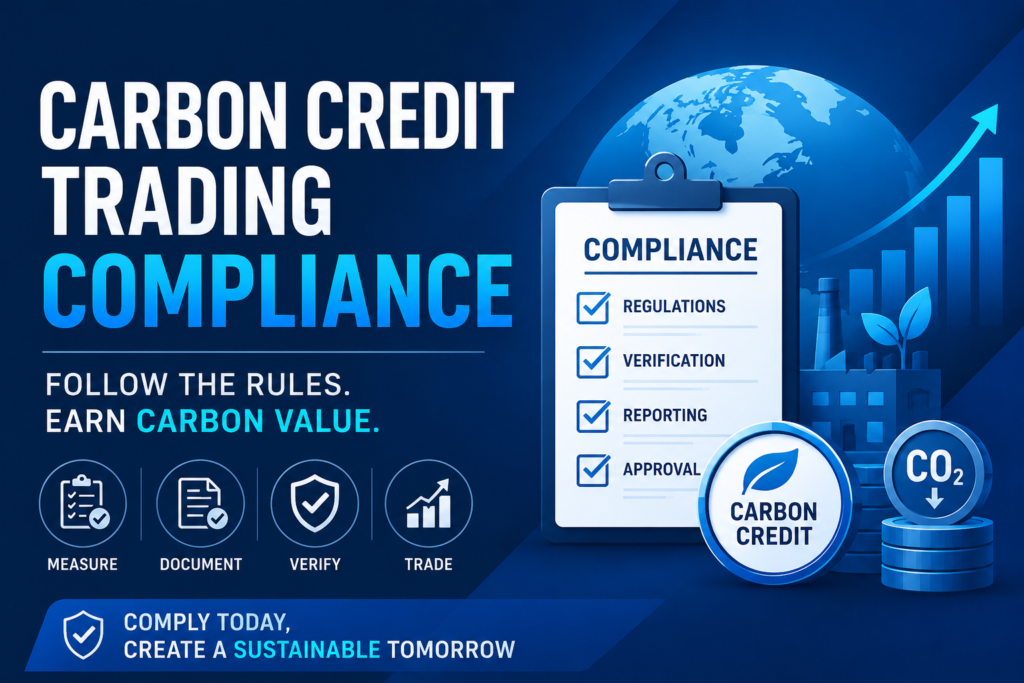
Carbon Credit Compliance for MSMEs: Step-by-Step Guide to Verification, Aggregation and Trading in India (2026) India’s regulated carbon market is transforming environmental compliance from a legal obligation into a strategic business opportunity. However, earning value from carbon credits is not as simple as reducing electricity consumption or installing solar panels. Businesses must demonstrate that their environmental improvements are measurable, verifiable, and compliant with the applicable regulatory framework. For many Micro, Small and Medium Enterprises (MSMEs), this is the most confusing part of carbon trading. Terms such as baseline emissions, measurement and verification (M&V), aggregation, carbon accounting, and certificate issuance often appear highly technical. The good news is that understanding the process is easier when broken into manageable steps. Whether you operate a textile unit, engineering workshop, food processing plant, chemical factory, packaging company, or service enterprise, the same basic principles apply: improve efficiency, document the improvements, verify the results, and participate in the market through the appropriate mechanism where eligible. Step 1: Establish Your Energy and Emissions Baseline Every carbon project begins with a baseline. A baseline represents the amount of energy your business consumed—or the greenhouse gases it emitted—before any efficiency improvements were made. Without a reliable baseline, it is impossible to demonstrate that emissions have actually been reduced. Typical baseline data may include: Electricity consumption records Diesel, LPG, natural gas, or coal usage Production volumes Machine operating hours Fuel purchase invoices Utility bills Existing equipment specifications Many businesses already possess much of this information through their accounting and operational records. Organizing these records systematically is the first step toward future participation in carbon markets. Step 2: Identify High-Impact Energy Efficiency Opportunities Not every investment delivers the same environmental or financial return. MSMEs should focus first on improvements that reduce energy use without affecting production quality. Common opportunities include: Electrical Systems Replacing old motors with high-efficiency models Installing Variable Frequency Drives (VFDs) Improving power factor Smart metering Automated controls Manufacturing Equipment Upgrading boilers Efficient furnaces Heat recovery systems Better insulation Process optimization Buildings and Facilities LED lighting High-efficiency air conditioning Motion sensors Efficient water pumps Roof insulation Renewable Energy Rooftop solar Solar water heating Biomass utilization Waste-to-energy systems (where appropriate) The combination of reduced operating costs and potential carbon value can significantly improve the financial viability of these investments. Step 3: Build a Reliable Carbon Accounting System Carbon trading depends on accurate data rather than estimates. Carbon accounting involves measuring greenhouse gas emissions associated with business operations and tracking changes over time. Even smaller enterprises benefit from maintaining organized records because future verification depends heavily on historical data. An effective carbon accounting system should include: Monthly energy consumption Fuel usage Production output Equipment upgrades Maintenance schedules Renewable energy generation Operational changes Digital recordkeeping can simplify this process and reduce the likelihood of missing information during verification. Step 4: Understand Measurement and Verification (M&V) Verification is the foundation of every credible carbon market. Independent accredited organizations review whether reported energy savings or emission reductions are genuine, measurable, and supported by evidence. During verification, reviewers may examine: Utility bills Meter readings Equipment purchase records Maintenance documentation Production data Operational procedures Site inspections The objective is to ensure that claimed environmental benefits are based on actual performance rather than assumptions. Why Documentation Is More Valuable Than Many Businesses Realize Many MSMEs invest in efficient machinery but fail to preserve supporting records. Years later, they may struggle to demonstrate the environmental improvements they achieved. Businesses should retain: Purchase invoices Installation reports Calibration certificates Maintenance logs Electricity bills Fuel invoices Production reports Audit findings Equipment manuals Strong documentation increases confidence during verification and reduces delays. Aggregation: The Smart Entry Route for Small Enterprises One of the biggest barriers for MSMEs is scale. A single workshop may save only a modest amount of energy each year. On its own, the administrative cost of verification may outweigh the potential benefits. Aggregation solves this challenge. Under an aggregation model, multiple MSMEs with similar energy-saving projects can participate collectively. A project developer, Energy Service Company (ESCO), industry association, or specialized sustainability firm coordinates documentation, verification, and market participation. Aggregation can provide: Lower transaction costs Shared technical expertise Professional compliance support Better market access Simplified documentation Economies of scale For many small businesses, aggregation is likely to be the most practical pathway into carbon markets. Understanding Liquidity in Carbon Markets Generating eligible certificates is only one part of the process. Businesses also need a market where those certificates can potentially be traded. Liquidity refers to the ease with which buyers and sellers can complete transactions. A liquid market generally offers: More buyers Better price discovery Faster transactions Greater transparency Improved confidence As India’s regulated carbon market develops, liquidity is expected to improve through greater participation and standardized trading mechanisms. However, market conditions can change over time, and prices are influenced by supply, demand, and regulatory developments. Digital Technologies Are Changing Carbon Compliance Modern sustainability management increasingly relies on technology. Businesses are adopting: Smart energy meters IoT sensors Cloud-based monitoring Artificial intelligence Automated reporting software Predictive maintenance systems These technologies can improve data accuracy, simplify reporting, and help identify additional efficiency opportunities. While they do not replace regulatory verification, they can strengthen internal monitoring. Financing Green Upgrades One concern for MSMEs is the upfront cost of energy-efficient equipment. Possible financing options may include: Bank loans MSME credit schemes Energy Service Company (ESCO) models Equipment leasing Green finance products State or central government support programs (where available) Before making major investments, businesses should evaluate expected energy savings, maintenance costs, payback periods, and applicable incentives. Risks Every Business Should Understand Carbon markets create opportunities, but they also involve responsibilities. Businesses should recognize that: Not every efficiency project qualifies for certificates. Regulatory requirements may evolve. Verification standards must be met. Certificate values are not fixed and can fluctuate. Revenue is never guaranteed. Accurate documentation is essential. Seeking advice from qualified professionals before making investment decisions can help businesses understand eligibility and compliance requirements. Practical Example: A Small Manufacturing Cluster Imagine twenty small

Uncategorized

Why MSMEs Should Care About Carbon Trading

Why MSMEs Should Care About Carbon Trading India has over 63 million MSMEs, contributing significantly to manufacturing, exports, employment, and GDP. Although each small enterprise may consume relatively modest amounts of energy, their combined environmental footprint is substantial. Many MSMEs have already implemented improvements such as: LED lighting High-efficiency motors Solar rooftop systems Efficient boilers Waste heat recovery Improved insulation Variable Frequency Drives (VFDs) Compressed air optimization Smart energy monitoring Historically, these investments delivered savings only through lower electricity or fuel bills. Now, under the evolving carbon market, verified efficiency improvements may also create tradable environmental value where the regulatory framework allows. The Shift from Voluntary Carbon Markets to a Regulated Marketplace One of the biggest changes in India’s carbon ecosystem is the gradual move from voluntary participation toward a more structured, regulated marketplace. Voluntary Carbon Market In the voluntary market: Companies purchase credits voluntarily. Buyers often seek ESG or sustainability benefits. Prices can fluctuate significantly. Projects include afforestation, renewable energy, and waste management. Participation depends on private demand rather than regulatory obligations. Regulated Carbon Market The regulated market introduces: Standardized rules Compliance obligations for eligible entities Accredited verification Government oversight Structured trading mechanisms Greater transparency This framework aims to improve confidence in the integrity of environmental claims and create more predictable market participation How Carbon Credit Trading Works Although implementation details differ by sector, the overall process generally includes: Measure current emissions or energy use. Implement efficiency improvements. Document the results. Undergo independent verification. Receive eligible certificates where applicable. Trade certificates through authorized mechanisms. Each stage relies on accurate data, credible documentation, and compliance with the applicable rules. Why Aggregation Is a Game-Changer for Small Businesses Many MSMEs assume they are too small to participate in carbon markets. This is where aggregation becomes important. Aggregation combines the verified environmental improvements of many small businesses into a larger project, helping reduce administrative costs and improve market access. For example, instead of one small factory attempting to navigate complex verification alone, hundreds of similar enterprises can participate through a common platform managed by an aggregator, industry association, or specialized service provider. Aggregation may help with: Project documentation Energy data collection Verification coordination Compliance support Certificate management Market access This model can make participation more practical for smaller enterprises that would otherwise find the process too costly. Real-World Energy Savings That Could Matter Every business wastes energy somewhere. Common opportunities include: Replacing outdated electric motors Installing energy-efficient compressors Upgrading HVAC systems Improving furnace efficiency Switching to LED lighting Installing rooftop solar Recovering waste heat Optimizing production schedules Improving insulation Reducing idle equipment time These changes often reduce operating costs immediately. Depending on eligibility under the relevant scheme, verified improvements may also contribute to environmental certificates. The Business Case Beyond Carbon Revenue While carbon trading attracts attention, the broader business benefits are equally important. Energy-efficient businesses often experience: Lower electricity expenses Reduced fuel consumption Improved productivity Less equipment downtime Better competitiveness Stronger ESG credentials Improved customer confidence Greater attractiveness to investors and lenders Carbon-related income, where available, should be viewed as an additional benefit rather than the sole reason to invest in efficiency.

Uncategorized

 The Rise of Fintech Lenders and the Future of Traditional Banking Growth (2026)

 The Rise of Fintech Lenders and the Future of Traditional Banking Growth (2026) Introduction: The Battle for the Future of Credit For more than a century, banking success was measured by the size of branch networks, vaults, customer deposits, and lending portfolios. Massive headquarters, thousands of employees, and physical infrastructure symbolized trust and financial strength. Today, those very strengths are increasingly becoming operational burdens. A new generation of fintech lenders has rewritten the rules of lending. Instead of relying on paperwork, physical branches, and weeks of manual verification, these companies use artificial intelligence, machine learning, digital identity verification, banking APIs, GST data, UPI transactions, and alternative financial datasets to approve loans within minutes—or sometimes seconds. The result is one of the biggest transformations in financial services since the emergence of internet banking. Traditional banks remain dominant in terms of deposits, regulatory standing, and overall assets, but fintech firms are changing customer expectations. The competition is no longer about who has the biggest balance sheet. It is about who can make the fastest and most accurate lending decision. This digital revolution is particularly transforming the MSME sector, where millions of businesses have historically struggled to access timely credit. The question is no longer whether fintech will change banking. The real question is whether traditional banking growth models can evolve quickly enough to compete. Why MSMEs Became the Biggest Opportunity Micro, Small, and Medium Enterprises contribute significantly to employment and economic activity across many countries. Yet for decades, obtaining business loans remained difficult because of: Lengthy paperwork Multiple branch visits Physical collateral requirements Manual income verification Limited credit history Slow underwriting Many entrepreneurs simply gave up. Others depended on informal lending channels. This financing gap created the perfect opportunity for digital lenders. Instead of asking: “How much collateral do you own?” Fintech asks: “How does your business perform every day?” That shift completely changes credit evaluation. Traditional Banking: Built for Stability Banks have always prioritized risk management. Their lending process typically involves: KYC verification Income assessment Credit bureau checks Manual underwriting Risk committee approval Legal documentation Loan disbursement Each stage helps reduce defaults but also increases processing time and operating costs. This model works well for large loans. However, it becomes expensive for smaller MSME loans. A ₹2 lakh business loan may require nearly the same documentation as a ₹2 crore loan. That economic imbalance creates inefficiencies. Fintech’s Biggest Advantage: Data Instead of Documents Modern fintech lenders often evaluate businesses using digital financial signals rather than relying solely on traditional paperwork. Examples include: GST returns Bank statement analysis UPI collections Digital invoices E-commerce sales Accounting software Utility payments Tax compliance history Payment gateway transactions AI models analyze thousands of variables simultaneously. Instead of waiting days for manual verification, automated systems can generate preliminary credit decisions within minutes. This doesn’t eliminate human oversight in every case, but it significantly reduces processing time. Artificial Intelligence Is Changing Credit Assessment Traditional credit scoring often focuses on past borrowing history. AI-based lending models attempt to build a broader financial picture. Algorithms may examine patterns such as: Cash flow stability Seasonal revenue changes Customer concentration Supplier relationships Business growth trends Invoice payment cycles Inventory turnover Digital transaction consistency Rather than relying on one score, lenders can evaluate multiple risk indicators. This allows businesses with limited traditional credit histories to become eligible for financing. Why Physical Branches Are Becoming Less Important Branches remain valuable for advisory services, complex financial products, and customer relationships. However, many routine banking activities have already shifted online. Customers increasingly expect to: Open accounts digitally Apply for loans online Upload documents electronically Track applications in real time Receive funds digitally Repay through automated systems Fintech firms were designed around these expectations from the beginning. Traditional banks often have to modernize decades-old technology while continuing daily operations. That transformation is both expensive and technically challenging. The Cost Advantage of Digital-First Lending Maintaining thousands of branches involves significant expenses: Rent Utilities Security Staff Cash management Maintenance IT support Digital lenders generally operate with leaner structures. Lower operating costs can enable faster scaling and greater flexibility, though they also face substantial investments in technology, cybersecurity, compliance, and customer acquisition. Automation also reduces repetitive manual work, allowing teams to focus on more complex cases. Why MSMEs Prefer Digital Lending Small businesses value speed. Waiting several weeks for working capital can mean: Missed inventory purchases Delayed salaries Lost contracts Cash flow disruptions Digital lenders often emphasize: Faster applications Paperless documentation Transparent status tracking Flexible repayment options Smaller loan sizes Continuous customer engagement Convenience has become a major competitive advantage. Embedded Finance Is Redefining Lending Many businesses no longer visit a lender to obtain financing. Instead, loans increasingly appear within platforms they already use. Examples include: E-commerce marketplaces Accounting software Payment gateways POS systems Logistics platforms Supply chain applications This model, known as embedded finance, brings credit directly into business workflows. The lender becomes almost invisible. Open Banking and API-Based Lending Financial data sharing—with customer consent and subject to applicable regulations—is expanding digital lending opportunities. Instead of manually collecting documents, lenders may access verified financial information through secure APIs. Benefits include: Faster verification Reduced fraud Better underwriting Lower operational costs Improved customer experience The future of lending increasingly depends on connected financial ecosystems rather than isolated institutions. Where Traditional Banks Still Hold the Advantage Despite fintech’s rapid growth, banks retain significant strengths. These include: Large Deposit Base Banks have access to stable funding through customer deposits. Many fintech lenders rely on partnerships or external funding sources. Customer Trust Established banks have long-standing reputations and regulatory oversight that many customers value. Broader Product Portfolio Banks offer: Savings accounts Current accounts Mortgages Trade finance Wealth management Corporate banking Treasury services Fintech companies often focus on narrower product areas. Strong Regulatory Framework Banks operate under extensive prudential regulations designed to support financial stability. Why Banks Are Investing in Digital Transformation Most leading banks are not ignoring fintech competition. Many are investing heavily in: AI underwriting Digital onboarding Cloud infrastructure Mobile banking API

Scroll to Top