SEBI के नियम जो तय करते हैं कि Listed Companies कैसे काम करेंगी
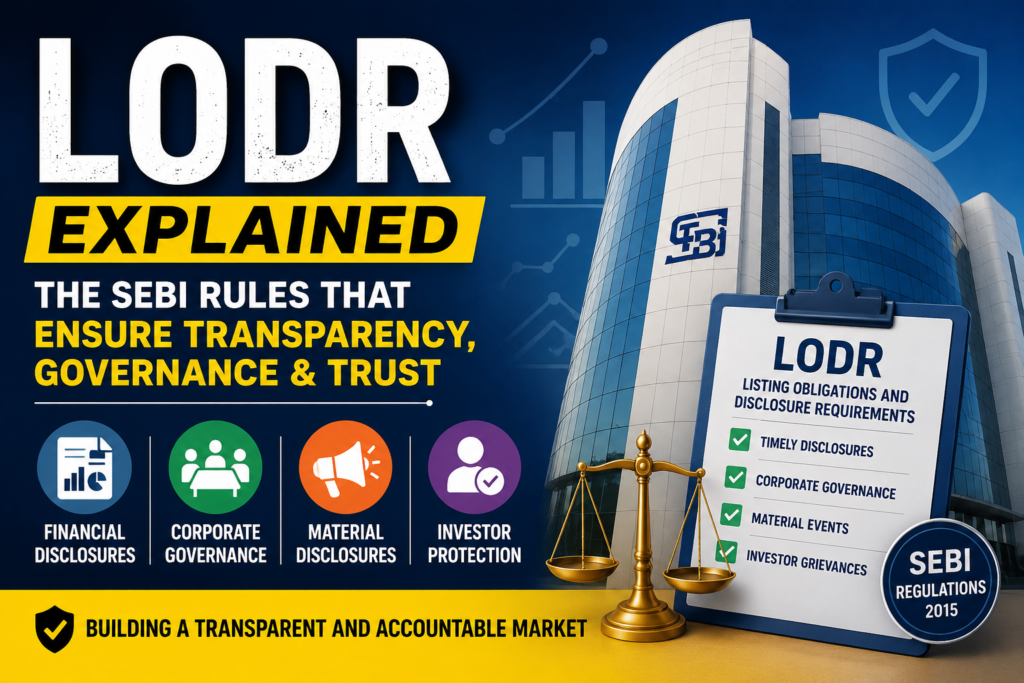
SEBI के नियम जो तय करते हैं कि Listed Companies कैसे काम करेंगी अगर आपने कभी शेयर मार्केट में निवेश किया है या किसी कंपनी के quarterly results, board meeting updates या बड़े corporate announcements के बारे में सुना है, तो आपने अप्रत्यक्ष रूप से LODR Regulations का असर जरूर देखा होगा। LODR यानी Listing Obligations and Disclosure Requirements — यह SEBI द्वारा बनाया गया एक महत्वपूर्ण regulatory framework है, जो भारत की listed companies के लिए transparency और accountability सुनिश्चित करता है। 2015 में लागू किए गए ये नियम भारतीय stock market को अधिक भरोसेमंद, पारदर्शी और investor-friendly बनाने के उद्देश्य से बनाए गए थे। LODR का Full Form क्या है? LODR = Listing Obligations and Disclosure Requirements यह regulations का एक comprehensive set है जिसे SEBI (Securities and Exchange Board of India) ने बनाया है। इनका उद्देश्य है कि जो भी कंपनी भारतीय stock exchanges जैसे NSE या BSE पर listed है, वह investors को समय पर और सही जानकारी उपलब्ध कराए। LODR Regulations क्यों जरूरी हैं? Stock market में निवेश का सबसे बड़ा आधार होता है — विश्वास। अगर listed companies महत्वपूर्ण जानकारी छुपाने लगें, financial data समय पर न दें, या shareholders को अंधेरे में रखें, तो पूरा market प्रभावित हो सकता है। इसीलिए LODR regulations सुनिश्चित करते हैं कि: सभी investors को समान जानकारी मिले Market manipulation कम हो Corporate governance मजबूत हो Companies जवाबदेह रहें Public disclosures समय पर हों LODR का Core Purpose LODR regulations listed entities के संचालन और communication को standardize करते हैं। इसका मुख्य उद्देश्य तीन बड़े pillars पर आधारित है: 1. Transparency (पारदर्शिता) कंपनियों को हर महत्वपूर्ण जानकारी public domain में समय पर disclose करनी होती है। जैसे: बड़े acquisitions mergers litigations management changes financial results इससे insider information का misuse कम होता है। 2. Corporate Governance LODR rules कंपनी के board structure को regulate करते हैं। इनमें शामिल हैं: Independent directors की minimum संख्या Audit committee की अनिवार्यता Risk management policies Related party transaction approvals इससे management पर checks and balances बने रहते हैं। 3. Accountability (जवाबदेही) कंपनियों को नियमित reporting करनी होती है ताकि investors कंपनी की performance और compliance status समझ सकें। LODR किन क्षेत्रों को regulate करता है? LODR regulations कई महत्वपूर्ण compliance areas को cover करते हैं। 1. Financial Results Reporting Listed companies को mandatory basis पर financial statements submit करने होते हैं: Quarterly Results Half-Yearly Results Annual Financial Statements इन reports के जरिए investors कंपनी की financial health समझते हैं। 2. Board of Directors Rules SEBI ने board composition के लिए specific norms तय किए हैं: Independent directors की minimum requirement महिला director की अनिवार्यता (certain companies में) Directorship limits इसका उद्देश्य governance standards को मजबूत बनाना है। 3. Material Event Disclosures अगर कंपनी में कोई बड़ा event होता है, तो उसे तुरंत stock exchanges को inform करना होता है। उदाहरण: CEO या MD का resignation Acquisition या merger बड़ी legal disputes Fund raising announcements Credit rating changes कई disclosures के लिए strict timelines भी निर्धारित हैं। 4. Related Party Transactions LODR regulations related-party dealings पर खास ध्यान देते हैं ताकि promoter groups unfair advantage न ले सकें। Companies को: Such transactions disclose करने होते हैं Audit committee approval लेना होता है कई मामलों में shareholder approval भी जरूरी होता है 5. Investor Grievance Reporting Companies को investor complaints का record maintain करना होता है और उनकी resolution status report करनी होती है। यह investor protection का महत्वपूर्ण हिस्सा है। LODR किन कंपनियों पर लागू होता है? LODR regulations उन सभी entities पर लागू होते हैं जिनकी securities भारतीय stock exchanges पर listed हैं। इसमें शामिल हैं: Equity Shares Non-Convertible Debentures (NCDs) Non-Convertible Redeemable Preference Shares (NCRPS) Other listed securities यदि कोई कंपनी NSE या BSE जैसे recognized exchange पर listed है, तो उसे LODR compliance follow करना ही होगा। LODR का Investors पर क्या असर पड़ता है? LODR regulations ने Indian stock market में investor confidence बढ़ाने में बड़ी भूमिका निभाई है। Investors को फायदे: समय पर जानकारी मिलती है Corporate fraud risk कम होता है Better decision-making possible होती है Market transparency बढ़ती है Companies के लिए Challenges हालांकि LODR transparency बढ़ाता है, लेकिन compliance maintain करना आसान नहीं होता। Companies को: Continuous disclosures करने होते हैं Compliance teams maintain करनी पड़ती हैं Timelines का strict पालन करना पड़ता है Regulatory penalties से बचना होता है Non-compliance की स्थिति में SEBI penalties, fines और trading restrictions भी लगा सकता है। Recent Importance of LODR in India पिछले कुछ वर्षों में SEBI ने corporate governance और disclosure standards को और मजबूत किया है। Market capitalization बढ़ने और retail investors की संख्या तेजी से बढ़ने के कारण LODR regulations की relevance पहले से कहीं अधिक बढ़ गई है। आज investors केवल profit नहीं देखते, बल्कि: governance standards disclosure quality management transparency को भी evaluate करते हैं। निष्कर्ष LODR regulations भारतीय capital market की backbone माने जाते हैं। ये केवल compliance rules नहीं हैं, बल्कि listed companies और investors के बीच विश्वास बनाए रखने का एक महत्वपूर्ण माध्यम हैं। अगर आप stock market investor हैं, finance professional हैं, या corporate compliance को समझना चाहते हैं, तो LODR regulations की basic understanding बेहद जरूरी है। SEBI का यह framework Indian markets को अधिक transparent, disciplined और globally competitive बनाने में अहम भूमिका निभा रहा है।