
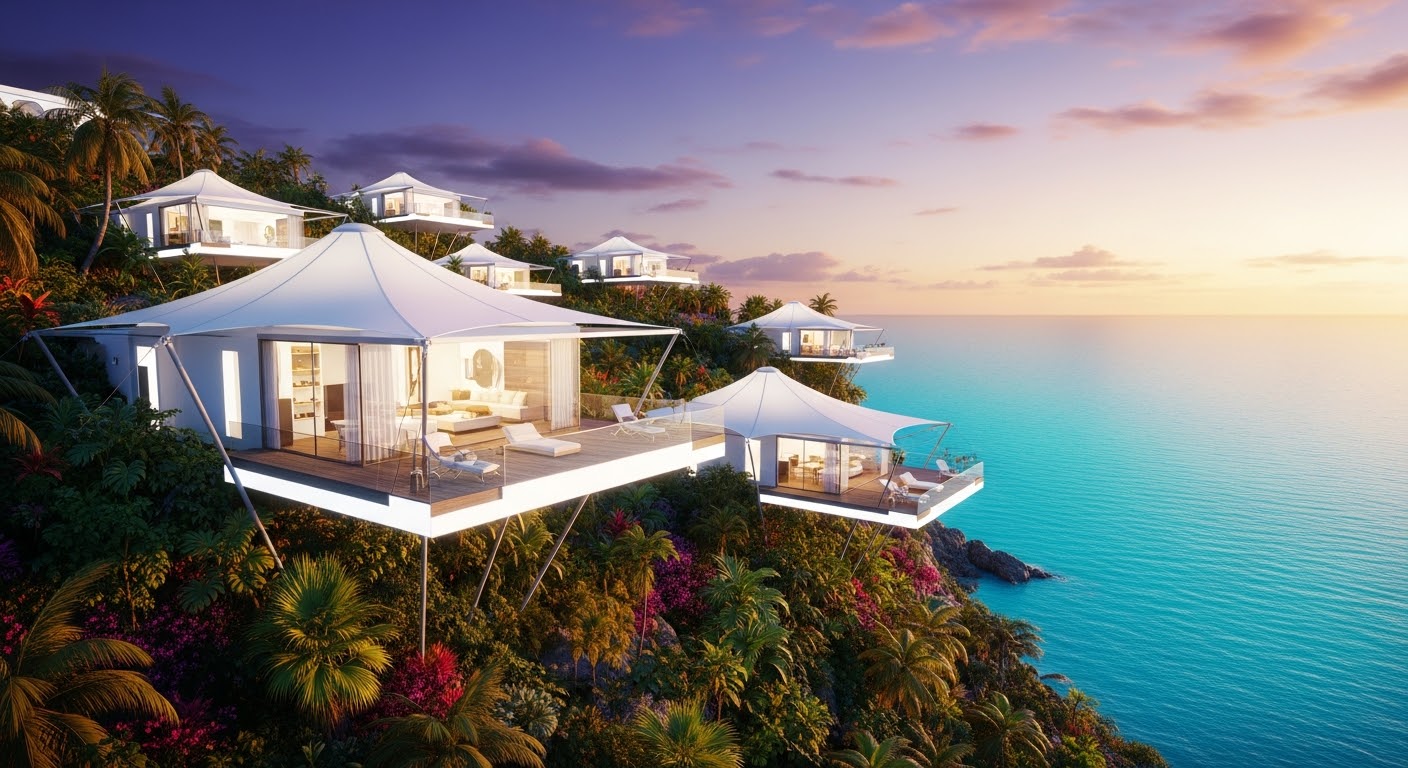
Every hospitality investment eventually arrives at a single defining question: When does the project begin creating real wealth? Beautiful architecture, sustainable design, luxury amenities, and premium guest experiences all contribute to market appeal, but investors ultimately measure success through financial performance. Cash flow must exceed operating costs, debt obligations must remain manageable, and the initial capital investment must generate returns that justify the risks undertaken. This is where break-even analysis, payback calculations, Internal Rate of Return (IRR), and long-term asset value become the ultimate tests of any hospitality business model.
Prefabricated sustainable luxury tents have attracted considerable attention because they fundamentally alter these financial equations. Lower capital expenditure is only the starting point. The combination of faster construction, earlier revenue generation, lean operating costs, and scalable expansion creates a financial structure that often differs significantly from traditional resort development. Investors are increasingly discovering that the most valuable hospitality assets are not necessarily those built with the highest budgets, but those capable of converting invested capital into recurring profits with maximum efficiency.
The first metric examined by lenders and equity investors is the break-even point. In simple terms, break-even represents the level of occupancy at which total revenue equals total operating expenses, financing costs, and fixed obligations. Until this threshold is reached, the business consumes capital rather than generating it. Every additional occupied night beyond break-even contributes directly toward profitability and shareholder returns.
The Contrarian Comparison: Challenging Traditional Hospitality Economics
Traditional luxury hotels frequently face relatively high break-even occupancy levels because their fixed costs remain substantial regardless of guest volume. Large buildings require continuous maintenance, extensive staffing, climate control systems, elevators, security operations, and common area management whether occupancy stands at thirty percent or ninety percent. High debt resulting from expensive construction further increases monthly financial obligations.
Glamping resorts operate with a fundamentally different cost structure. Their lower capital investment generally results in smaller loan amounts and reduced interest payments. Maintenance requirements are distributed across individual modules rather than centralized buildings. Staffing models remain lean, while utilities are optimized through decentralized systems and renewable energy integration. Because recurring expenses remain comparatively lower, many modular hospitality projects can sustain operations at lower occupancy levels than conventional luxury hotels, although actual break-even points depend on the project’s financing structure, pricing, and operating costs.
To understand the financial implications, consider a hypothetical luxury glamping development consisting of thirty premium accommodation units located within an emerging eco-tourism destination. If average nightly rates remain strong and operating expenses are effectively controlled, the resort may achieve positive operating cash flow at occupancy levels substantially below those required by an equivalently positioned conventional hotel. This provides operators with greater resilience during seasonal demand fluctuations and economic uncertainty.

Occupancy management therefore becomes one of the most powerful financial tools available to resort operators. Rather than pursuing maximum occupancy throughout the year, many successful glamping businesses focus on maximizing revenue per available unit while maintaining exclusivity. Premium pricing often produces stronger profitability than discounted rates intended solely to increase occupancy percentages.
Revenue management systems now use artificial intelligence to optimize room pricing based on booking patterns, seasonal demand, weather forecasts, local events, airline capacity, competitor pricing, and historical guest behavior. Instead of relying upon static tariffs, operators dynamically adjust pricing to maximize overall revenue generation.
Weekend demand frequently commands premium pricing due to leisure travelers seeking nature escapes. Weekday demand increasingly comes from corporate retreats, wellness programs, educational workshops, destination weddings, photography expeditions, and remote working experiences. Diversifying customer segments reduces dependence upon any single source of revenue while stabilizing annual occupancy.
One of the most frequently discussed advantages of modular hospitality involves the payback period. Conventional luxury resorts often require ten to fifteen years before investors fully recover their initial capital investment, particularly when construction delays, financing costs, and market volatility are considered. Large-scale infrastructure projects demand patience because significant cash flows may not emerge until years after development begins.
Prefabricated luxury tents shorten this timeline by attacking multiple financial variables simultaneously. Lower construction costs reduce the amount of capital requiring recovery. Faster project completion accelerates revenue generation. Lean operating models improve annual cash flow. Incremental expansion allows capacity to grow alongside demand rather than requiring maximum investment from the outset.
Under favorable market conditions and disciplined financial management, some modular hospitality developments may target capital recovery within approximately three to five years. Actual outcomes depend on numerous variables including occupancy, pricing, financing, location, operating efficiency, and macroeconomic conditions. Investors should therefore prepare project-specific financial models rather than relying upon generalized industry estimates.
The speed of capital recovery produces significant strategic advantages. Earlier repayment of debt reduces financial risk while strengthening future borrowing capacity. Free cash flow becomes available sooner for expansion, technology upgrades, sustainability investments, or acquisition of additional tourism properties. Investors benefit from greater flexibility because capital is not permanently tied to a single long-duration project.
Seasonality remains one of the most important variables affecting hospitality economics. Nature-based tourism frequently experiences fluctuations driven by climate, school holidays, festivals, and regional travel patterns. A mountain resort may achieve exceptional occupancy during cooler months while experiencing lower demand during monsoon seasons. Coastal destinations often exhibit the opposite pattern.
Successful operators address seasonality through product diversification rather than price discounting alone. Wellness retreats, corporate leadership programs, adventure sports, astronomy weekends, culinary festivals, birdwatching expeditions, cultural immersion experiences, digital detox packages, and educational tourism create demand throughout the calendar year. Instead of depending entirely on leisure travelers, operators cultivate multiple customer segments capable of sustaining occupancy across different seasons.

Expense management during lower-demand periods becomes equally important. Modular infrastructure enables selective closure of accommodation units for maintenance without disrupting entire resort operations. Staffing schedules may be adjusted according to occupancy forecasts, while predictive maintenance software identifies equipment requiring service before costly failures occur. Such flexibility helps preserve net operating income even when seasonal demand softens.
Climate resilience has emerged as another central consideration for hospitality investors. Increasingly volatile weather patterns require accommodation systems capable of withstanding high winds, heavy rainfall, temperature extremes, and changing environmental conditions. Early generations of luxury tents were often perceived as temporary structures vulnerable to severe weather. Modern engineering has substantially altered that perception.
Contemporary prefabricated luxury tents utilize advanced tensile fabrics, corrosion-resistant structural frames, insulated composite flooring, laminated glazing systems, and engineered anchoring technologies designed to meet demanding performance standards. High-quality materials improve durability while extending useful asset life. Preventive maintenance programs further enhance long-term reliability.
Climate resilience is not solely an engineering issue but also a financial consideration. Durable infrastructure reduces insurance claims, minimizes operational interruptions, protects guest safety, and preserves brand reputation. Investors increasingly evaluate resilience alongside traditional financial metrics because operational continuity directly influences long-term profitability.
Insurance providers are similarly adapting to evolving construction technologies. Rather than treating modular hospitality as temporary accommodation, many insurers now assess projects according to engineering specifications, fire safety systems, site management practices, and environmental risk profiles. Well-designed developments supported by robust maintenance programs often secure more favorable insurance terms than poorly planned projects.
One of the most distinctive financial characteristics of modular hospitality lies in asset mobility. Conventional hotels remain permanently attached to their locations. If tourism demand shifts, demographic trends change, infrastructure deteriorates, or competing destinations emerge, investors possess limited flexibility. Buildings cannot simply relocate to more attractive markets.
Prefabricated luxury tents offer a unique strategic option. Individual accommodation units may, subject to engineering, legal, and logistical considerations, be relocated, upgraded, sold, or redeployed to alternative destinations. This flexibility transforms physical assets into more liquid investment components compared with conventional buildings.
Suppose a previously popular tourism destination experiences prolonged declines in visitor numbers due to environmental restrictions, transportation challenges, or changing travel preferences. A modular operator may evaluate the financial feasibility of relocating selected accommodation units to higher-growth destinations where demand remains stronger. While relocation involves costs and operational planning, the possibility itself provides investors with an additional layer of strategic flexibility unavailable within traditional real estate.
Liquidity also becomes valuable during portfolio optimization. Investors expanding into multiple destinations may transfer modules between properties according to seasonal demand, special events, or changing market conditions. Standardized manufacturing simplifies refurbishment and resale because individual units maintain identifiable market value independent of the original development.
As hospitality increasingly adopts asset-light business models, modular infrastructure aligns naturally with evolving investor preferences. Rather than committing excessive capital to immovable assets, operators preserve flexibility while maximizing capital productivity.
No financial analysis is complete without evaluating Internal Rate of Return. IRR represents the annualized rate at which future cash flows equal the initial investment. It incorporates both the timing and magnitude of expected returns, making it one of the most influential metrics in hospitality investment decisions.
Several characteristics of modular glamping contribute positively to IRR calculations. Lower upfront capital reduces the initial cash outflow. Accelerated construction brings forward revenue generation. Higher operating margins improve annual cash inflows. Incremental expansion limits unnecessary idle capital. Flexible asset management preserves long-term value while reducing downside risk.
Traditional luxury hotels continue generating attractive returns in premium urban markets and globally recognized tourist destinations. However, in many emerging eco-tourism corridors, modular developments increasingly demonstrate competitive financial performance because their capital structures align more closely with evolving traveler preferences and investor expectations.
Institutional investors, private equity firms, family offices, and hospitality funds are paying increasing attention to these characteristics. Environmental, Social, and Governance objectives, combined with stronger capital efficiency, position sustainable glamping as an increasingly attractive segment within alternative real estate portfolios.
Technology will further strengthen these economics during the coming years. Artificial intelligence will optimize pricing with greater precision. Predictive maintenance systems will reduce repair costs. Renewable energy technologies will continue lowering operating expenses. Autonomous security systems, robotic cleaning assistance, and advanced guest personalization platforms will improve efficiency while enhancing visitor satisfaction.
Construction technologies are evolving equally rapidly. Lightweight composite materials, recyclable structural components, smart glazing systems, advanced insulation technologies, and modular manufacturing automation will likely reduce future construction costs while extending asset life. These innovations improve lifecycle economics, making sustainable hospitality increasingly competitive against traditional construction methods.
Looking beyond 2027, hospitality development appears poised to become more flexible, technology-driven, and environmentally responsible. Investors are unlikely to abandon conventional luxury hotels altogether. Iconic urban properties, heritage destinations, and integrated resorts will continue serving important market segments. Nevertheless, the fastest-growing opportunities increasingly lie within experiences that combine nature, sustainability, operational efficiency, and disciplined capital allocation.
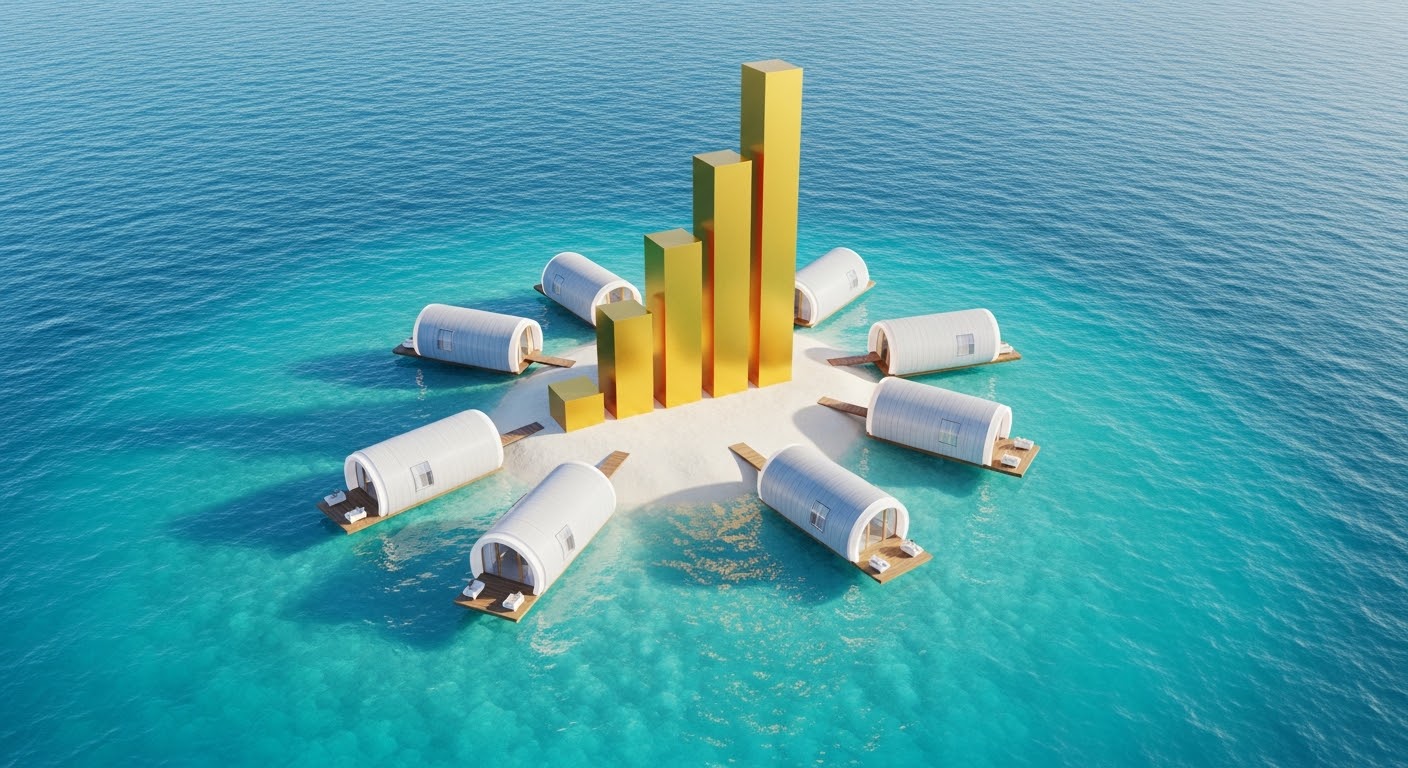
The debate is therefore no longer whether glamping represents a temporary travel trend. The evidence increasingly suggests it has matured into a distinct hospitality asset class supported by changing consumer preferences, technological innovation, and improved investment economics.
The most successful investors will likely be those who evaluate hospitality not merely through architecture or prestige but through measurable financial performance. Every construction decision influences capital expenditure. Every operational choice affects EBITDA. Every pricing strategy shapes cash flow. Every sustainability initiative contributes to long-term resilience. When these variables are carefully integrated, prefabricated luxury tents become far more than stylish accommodation—they become sophisticated financial assets capable of generating attractive risk-adjusted returns.
The future of hospitality belongs to businesses that deploy capital intelligently rather than simply spending more of it. Modular luxury demonstrates that profitability does not necessarily require larger buildings or longer construction timelines. Instead, sustainable design, operational discipline, technological innovation, and financial efficiency are redefining what successful hospitality investment looks like in the modern era.
For developers evaluating their next project, the most important lesson is clear: the strongest balance sheet may not belong to the resort with the tallest building or the most extravagant lobby. It may belong to the one that reaches the market first, adapts fastest to changing demand, controls operating costs with precision, and converts every dollar of invested capital into long-term, sustainable cash flow. That is the economic foundation upon which the next generation of luxury glamping resorts is being built.