

The initial capital savings achieved through prefabricated luxury tents capture the attention of most investors, but experienced hospitality operators know that construction cost is only the beginning of the financial story. The true success of a glamping resort is determined long after the last modular unit has been installed. Once guests begin arriving, daily operations become the primary driver of profitability, cash flow, and investor returns. A project with low construction costs but weak operational performance can quickly become financially unsustainable, while a well-managed glamping resort with disciplined cost control and premium pricing can outperform traditional luxury hotels despite having a significantly smaller capital base.
This is where the unit economics of sustainable glamping become particularly compelling. Every tent, cabin, or modular suite functions as an independent revenue-generating asset with measurable operating costs and predictable income streams. Investors are increasingly evaluating glamping projects not merely as tourism ventures but as carefully engineered financial systems where every occupied night contributes toward expanding margins and accelerating capital recovery. The objective is no longer simply to build beautiful accommodations but to create hospitality assets capable of generating consistent free cash flow with lower operational complexity than conventional hotels.
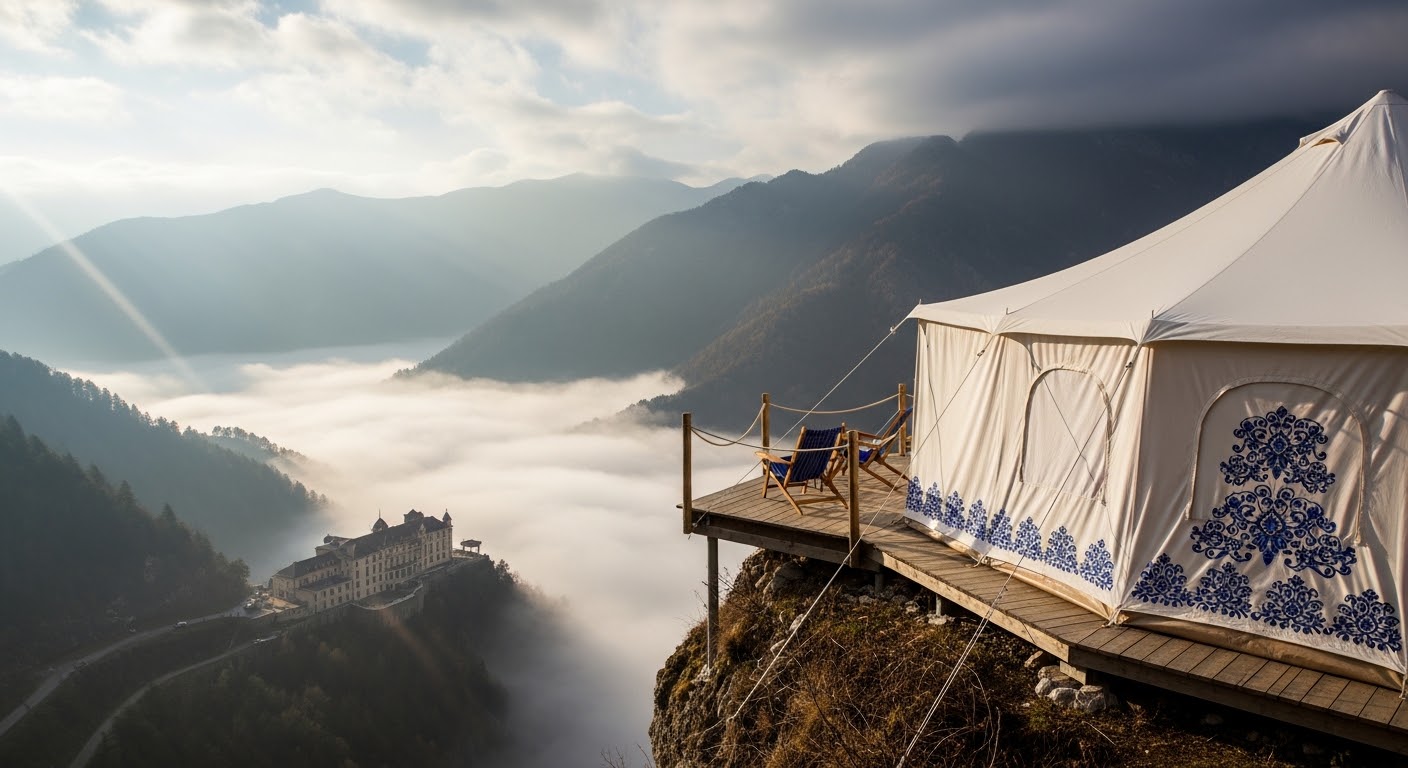
One of the greatest advantages of prefabricated luxury tents lies in their remarkably lean operating structure. Traditional five-star hotels require large teams across multiple departments including front office operations, concierge services, engineering, housekeeping, food production, security, landscaping, maintenance, administration, and guest relations. Large buildings demand continuous upkeep, sophisticated mechanical systems, elevators, centralized air-conditioning plants, extensive plumbing networks, and round-the-clock technical supervision. Every additional square foot of permanent construction increases maintenance obligations throughout the property’s lifecycle.
Glamping resorts operate under an entirely different philosophy. Instead of managing a single massive building, operators oversee individual accommodation units distributed across natural landscapes. Modern layouts intentionally minimize unnecessary infrastructure while maximizing guest privacy. Advances in automation allow many operational functions to occur with minimal human intervention, enabling significantly smaller staffing models without compromising guest satisfaction.
Smart hospitality technology has become one of the most influential contributors to operating efficiency in 2026. Digital booking systems integrate directly with property management platforms, allowing reservations, payments, room allocation, and guest communications to occur automatically. Mobile applications provide digital check-in and check-out, reducing front desk staffing requirements. Smart locks eliminate physical key management while improving security and convenience. Automated lighting systems, climate controls, occupancy sensors, and energy management software optimize electricity consumption without requiring manual supervision.
These technologies reduce labor intensity while improving operational consistency. Instead of maintaining large reception teams twenty-four hours a day, a boutique glamping property may require only a small guest services team supported by centralized digital systems. Administrative efficiency improves because repetitive tasks are automated, allowing employees to focus on personalized guest experiences rather than paperwork.
Housekeeping operations also benefit from modular design. Luxury tents generally contain fewer fixtures, smaller floor areas, and simplified interiors compared with traditional hotel suites. Cleaning procedures become faster and more standardized, reducing labor hours per occupied room. Maintenance teams similarly experience lower workloads because prefabricated structures utilize factory-installed systems designed for easy inspection and replacement. Individual modules can often be serviced independently without disturbing neighboring accommodations, minimizing operational disruption.
Utility management represents another major contributor to operating profitability. Conventional luxury hotels consume enormous quantities of electricity, water, and fuel due to centralized infrastructure and high guest density. Air-conditioning systems cool large common areas regardless of occupancy. Extensive lighting remains operational throughout public spaces. Water distribution networks serve restaurants, banquet facilities, conference halls, spas, and recreational amenities simultaneously.
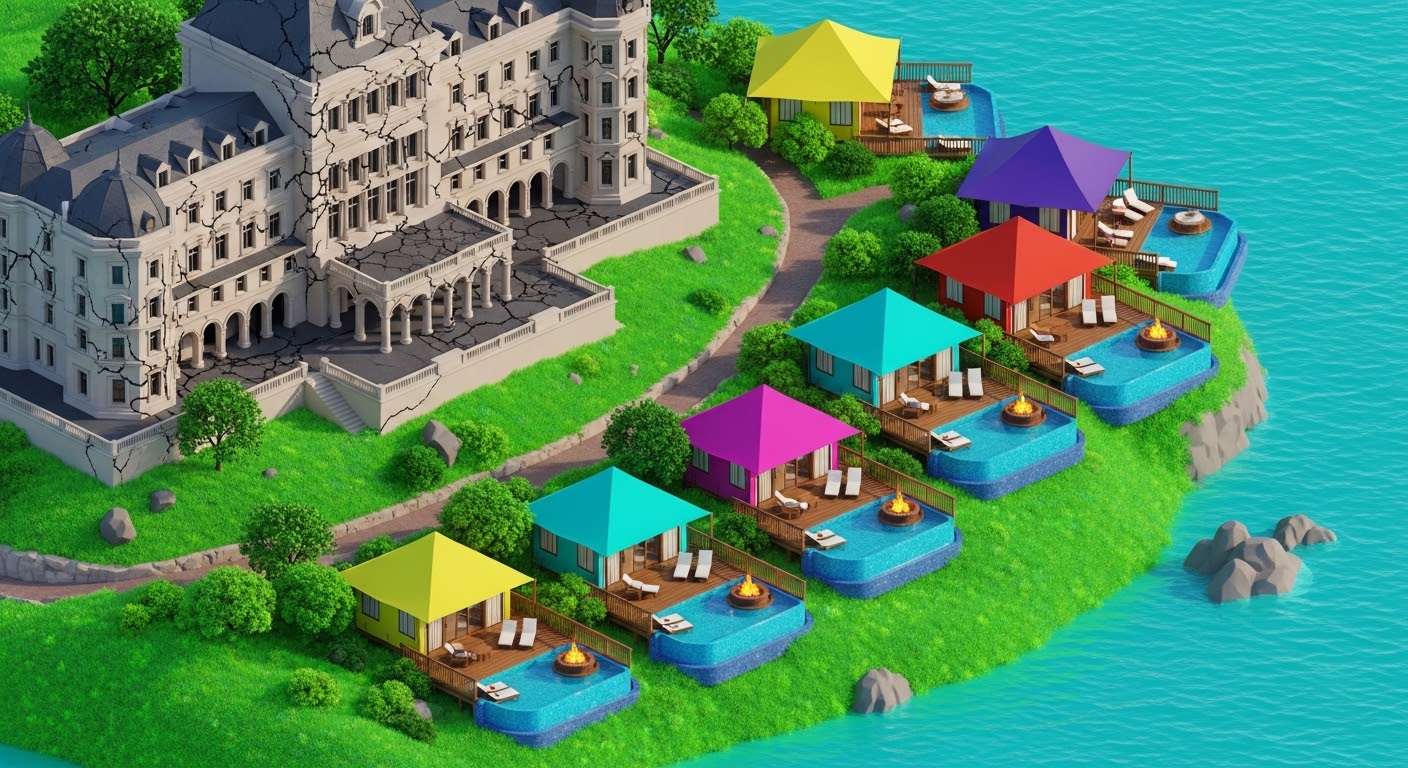
Sustainable glamping adopts a decentralized approach. Each accommodation unit functions almost as an independent ecosystem. Solar photovoltaic panels increasingly supplement electricity requirements. Rainwater harvesting systems reduce freshwater dependence. Greywater recycling supports landscaping and irrigation. High-performance insulation lowers cooling loads, while energy-efficient appliances reduce ongoing electricity consumption. Occupancy-based automation ensures that heating, ventilation, and lighting operate only when required, substantially lowering monthly utility expenses.
Lower operating costs directly improve EBITDA margins, one of the most closely monitored performance indicators in hospitality finance. Earnings Before Interest, Taxes, Depreciation, and Amortization provide investors with a clear view of the property’s operational efficiency independent of financing decisions. A glamping resort that consistently generates strong EBITDA demonstrates its ability to convert revenue into operating profit while maintaining disciplined expense control.
Revenue generation has also evolved significantly within the premium glamping sector. Historically, luxury accommodation pricing depended heavily on room size, location, and hotel brand recognition. Modern travelers increasingly assign greater value to exclusivity, environmental immersion, and curated experiences than to conventional luxury features. A thoughtfully designed luxury tent overlooking a lake, forest, or mountain range frequently commands average daily rates comparable to prestigious urban hotels despite occupying substantially less built-up area.
This pricing power stems from experience rather than architecture. Guests willingly pay premium rates for sunrise views, outdoor bathtubs, private decks, wildlife encounters, stargazing opportunities, wellness retreats, organic dining, and personalized adventure itineraries. The accommodation itself becomes only one component of a broader experiential offering that cannot easily be replicated within conventional city hotels.
As a result, average daily rates across successful glamping destinations have continued rising throughout 2026, particularly within destinations emphasizing sustainability, wellness, and digital detox experiences. Limited inventory further strengthens pricing flexibility. Unlike large hotels operating hundreds of rooms, boutique glamping resorts intentionally restrict capacity to preserve exclusivity, enabling operators to maintain higher room rates while protecting the guest experience.
Revenue diversification strengthens financial resilience even further. Modern glamping businesses increasingly generate income from wellness programs, yoga retreats, destination weddings, corporate leadership events, photography workshops, culinary experiences, eco-tourism excursions, outdoor education, and adventure sports. These ancillary services often generate margins equal to or greater than accommodation revenue while requiring relatively modest incremental investment.

Food and beverage operations also benefit from changing consumer preferences. Instead of operating expensive multi-cuisine restaurants requiring large kitchen brigades, many luxury glamping properties focus on curated dining experiences emphasizing locally sourced ingredients, regional cuisine, farm-to-table concepts, and chef-led tasting menus. Smaller kitchens reduce staffing costs while enhancing authenticity, creating memorable guest experiences that justify premium pricing.
One frequently overlooked financial advantage involves taxation and insurance. Permanent concrete structures generally attract higher property valuations, leading to increased property tax obligations in many jurisdictions. Comprehensive structural insurance for large buildings also represents a significant recurring expense due to replacement costs and complex engineering systems.
Prefabricated luxury tents may, depending on local laws, regulatory classifications, and insurance underwriting practices, have different tax and insurance profiles. Because treatment varies significantly across jurisdictions, investors should obtain professional advice regarding the applicable rules. Where favorable classifications apply, lower assessed values and simplified structural designs can contribute to reduced recurring ownership costs, improving long-term operating margins.
Maintenance economics further reinforce the modular advantage. Traditional hotels eventually require expensive renovation cycles involving flooring replacement, repainting, plumbing upgrades, mechanical system modernization, furniture replacement, and extensive interior refurbishment. Such renovations frequently require temporary room closures, reducing revenue during construction.
Modular luxury tents simplify lifecycle asset management. Individual components can often be replaced independently without extensive demolition. Exterior fabric systems, interior panels, decking, glazing, or furniture may be upgraded selectively rather than renovating entire buildings. Because accommodation units remain largely independent, refurbishment can occur in phases while the remaining inventory continues generating revenue.
Depreciation planning also becomes strategically important. Prefabricated assets typically comprise multiple identifiable components with differing useful lives. Investors work with accountants to establish appropriate depreciation schedules based on applicable accounting standards and tax regulations. Effective asset management enables owners to anticipate replacement cycles while preserving consistent operating performance.
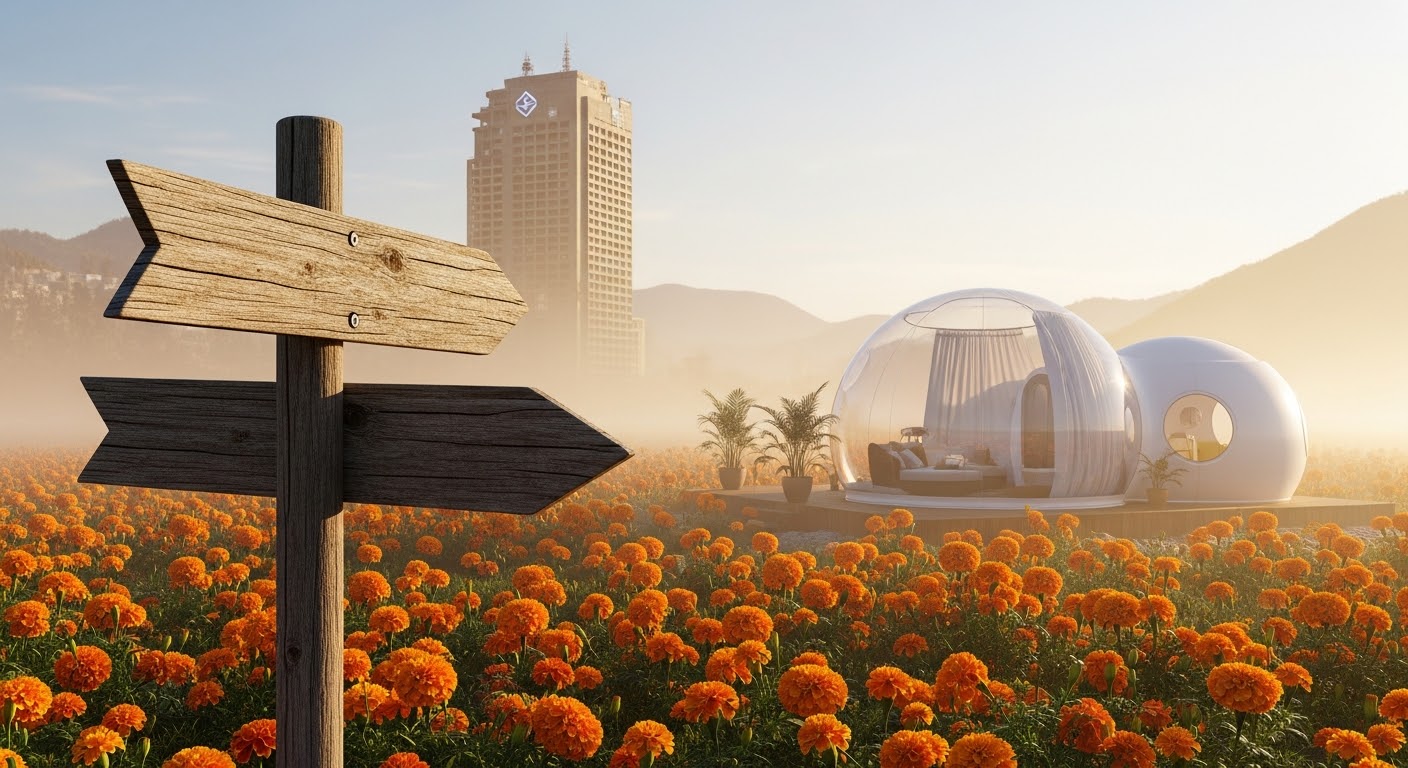
Land economics provide another compelling advantage. Unlike conventional hotel developments requiring substantial permanent foundations and extensive site modification, sustainable glamping often minimizes environmental disturbance. Developers frequently utilize land through long-term lease arrangements rather than outright acquisition, preserving capital for operational expansion and marketing initiatives.
This asset-light approach significantly improves Return on Invested Capital. By allocating less money toward land ownership and permanent construction, operators retain greater financial flexibility while benefiting from appreciating tourism demand. Capital that would otherwise remain tied to immovable assets can instead support technology upgrades, additional accommodation units, renewable energy systems, or strategic acquisitions.
Marketing efficiency has similarly transformed. Social media platforms increasingly reward visually distinctive destinations. Luxury tents overlooking dramatic landscapes naturally generate high volumes of user-generated content, effectively converting guests into brand ambassadors. Viral photography, influencer collaborations, travel blogs, and digital storytelling reduce dependence on expensive traditional advertising campaigns while expanding global visibility.
Corporate travel has emerged as another important revenue stream. Companies increasingly seek secluded environments for executive retreats, leadership development programs, wellness workshops, innovation sessions, and strategic planning meetings. Glamping resorts offer privacy, nature, and customized experiences unavailable within conventional conference hotels, enabling operators to secure premium corporate bookings during weekdays while leisure travelers dominate weekends.
Operational scalability represents perhaps the greatest long-term advantage. Conventional hotels often require large expansions involving years of construction before capacity meaningfully increases. Modular resorts expand progressively. Additional luxury tents can be installed in response to demonstrated demand, allowing revenue growth to finance future development while avoiding excessive debt accumulation.
Financial resilience therefore improves substantially. If tourism demand temporarily declines, operators retain flexibility to defer expansion without carrying the burden of oversized permanent infrastructure. Conversely, periods of strong occupancy enable rapid scaling with comparatively modest capital expenditure.
Investors increasingly recognize that profitability depends less on maximizing physical size than on maximizing operational efficiency. A carefully designed forty-unit glamping resort may produce stronger returns than a one-hundred-room hotel if higher pricing, lower staffing requirements, reduced utility consumption, disciplined maintenance, and efficient capital allocation combine to generate superior cash flow.
The hospitality industry has entered an era where technology, sustainability, and financial discipline intersect. Prefabricated luxury tents demonstrate that operational excellence no longer requires massive infrastructure. Instead, profitability increasingly emerges from intelligent design, lean management, recurring revenue optimization, and careful control of every operating expense.
These recurring operational advantages ultimately determine whether lower construction costs translate into superior long-term investment performance. However, no hospitality project can be evaluated solely through operating margins. Investors must still answer the most important financial question of all: How long will it take to recover the initial investment, and what level of occupancy is required to generate sustainable returns?
That question requires a comprehensive examination of break-even analysis, debt servicing capacity, occupancy thresholds, climate risks, asset liquidity, and Internal Rate of Return. These financial metrics separate attractive hospitality concepts from truly exceptional investment opportunities and will be explored in the final installment of this series.